
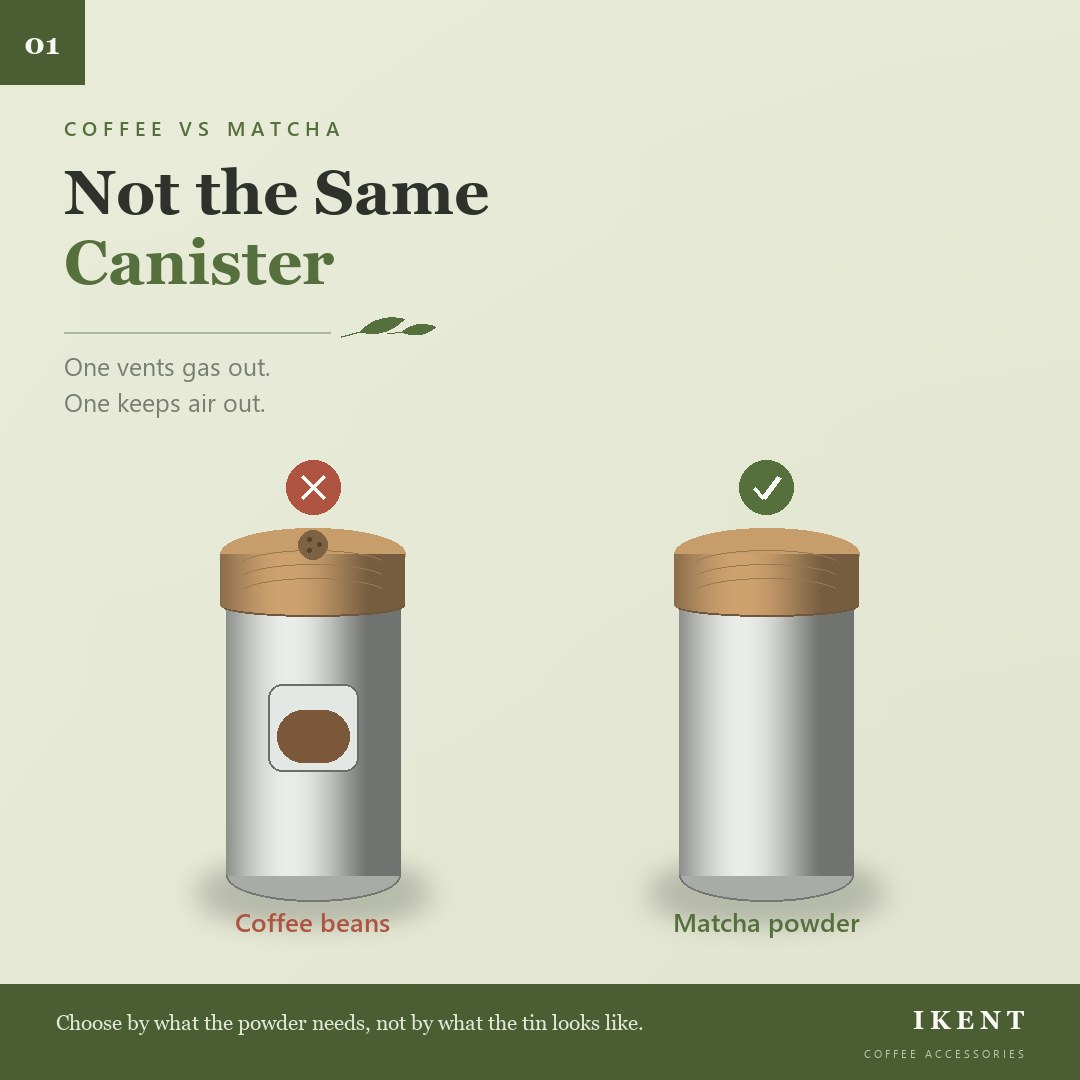
You can store matcha in a coffee canister, but the canister is working against you the whole time. A coffee bean canister is designed to let gas out; matcha powder needs a container designed to keep air and light out. Those are opposite jobs, and the two features that make a coffee canister good – the one-way valve and the viewing window – are the two that cost matcha its colour fastest.
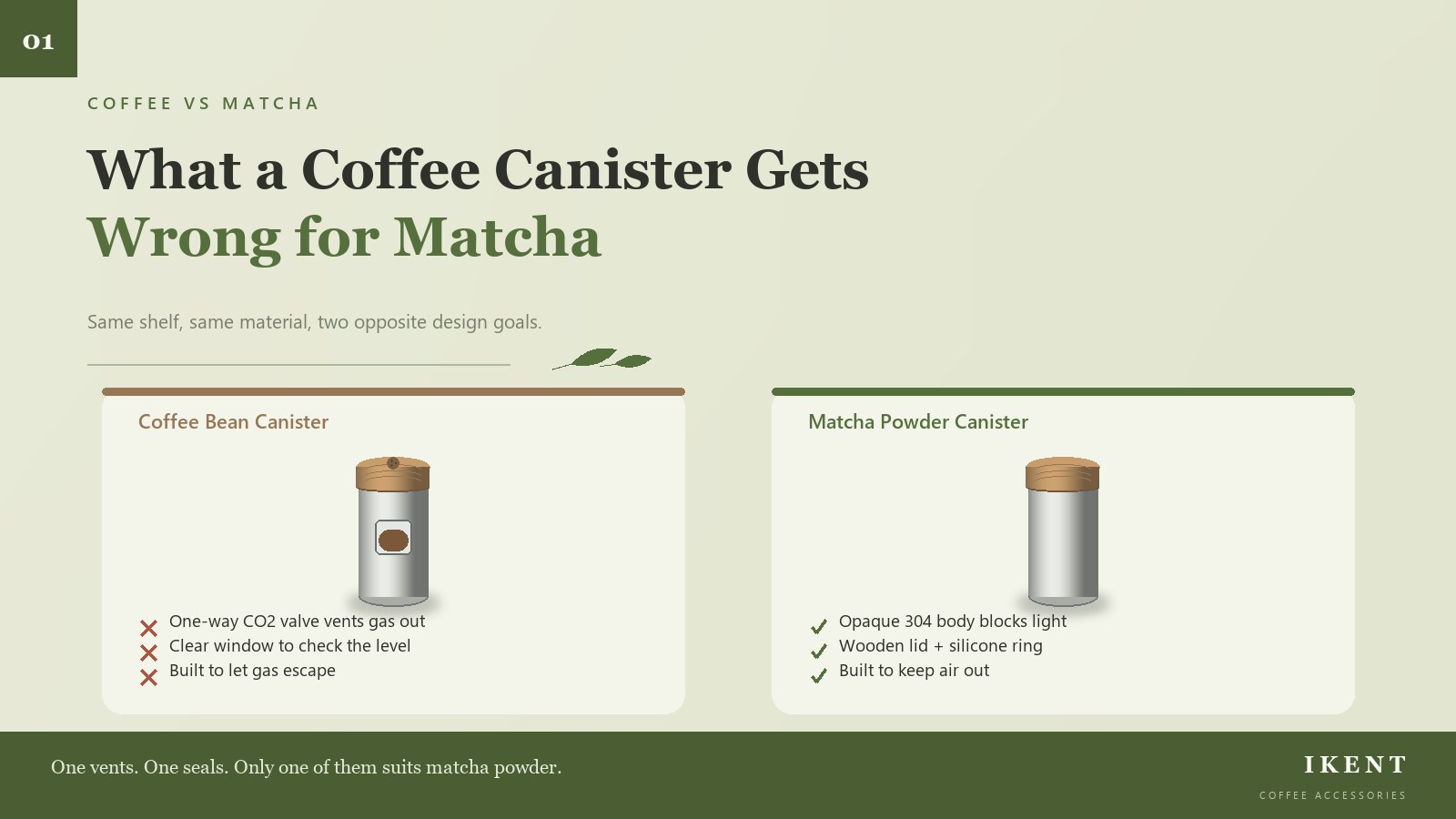
Why the two canisters are built for opposite jobs
Freshly roasted coffee beans keep releasing carbon dioxide for days after roasting. Left in a sealed container with no way out, that gas builds pressure and pushes the lid; left in a container with a one-way valve, the CO2 escapes without letting outside air back in. That is why the valve exists, and why it is a genuine selling point on a bean canister.
Matcha powder produces no gas. It is ground leaf, already oxidised to a halt, and its problem is not pressure but surface area: a fine powder exposes far more of itself to whatever air is in the headspace than a whole bean ever does. So the useful feature on a matcha canister is not an escape route. It is a seal tight enough that the headspace stays as small and as still as possible.
Once you see it that way, the rest follows. Every design choice on a bean canister optimises for venting; every design choice on a matcha canister should optimise for sealing and blocking light.
The valve: right for beans, backwards for powder
A one-way valve is a membrane that opens at a small pressure difference. It is a path, not a barrier. It does its job on beans because there is always positive pressure inside pushing outwards, so the path only ever flows one way.
Put powder behind that membrane and there is no pressure to hold it shut. The valve becomes a slow exchange port: humidity moves in when the container cools, and odours move in from wherever it is stored. Matcha is good at picking up both – it is the reason a tin kept next to the spice rack starts tasting faintly of the spice rack. A powder container has no reason to carry a part whose only function is to open.
If you are comparing two canisters and one has a valve, that canister was designed for beans. It is not a mark against the product; it just means it was built for a different content.
The window: useful on beans, costly for colour
The second coffee-canister habit that hurts matcha is the viewing window. On a bean canister it is genuinely handy – you can see how many beans are left without opening the lid. It is also a transparent panel set into a steel wall, which means there is a seam and a light path that would not otherwise exist.
Matcha’s green comes from chlorophyll, and chlorophyll is what light destroys first. A tin that sits on a counter with a window facing the room is being dosed with light every hour it is out. The powder near the panel fades before the powder at the back does, so the first scoop and the last scoop of the same tin do not look the same. That is the practical cost, and it is visible to whoever opens the tin.
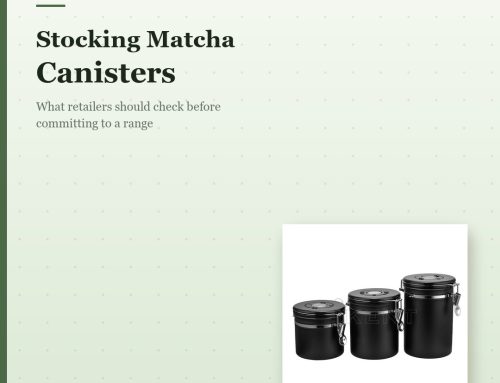
This is also the single most common spec error we see on matcha SKUs. A canister gets developed as a bean canister, keeps its window and its valve, then gets listed under matcha because the size is right. The listing says “opaque” and the product has a window. Buyers notice, usually at the sample stage.
What actually degrades matcha in storage
Four things shorten matcha’s usable life, and a canister can meaningfully address three of them. Light fades the colour, which is the change customers see first. Oxygen dulls the aroma and flattens the finish; the finer the powder, the faster this happens. Moisture makes powder cake and clump, and once it has caked it never scoops the same way again. Heat accelerates all three, which is why a shelf above the oven is the worst place in a kitchen.
None of this is exotic, and none of it needs a special material. It needs an opaque wall, a lid that actually seals, and a capacity small enough that the tin gets finished while it is still good.
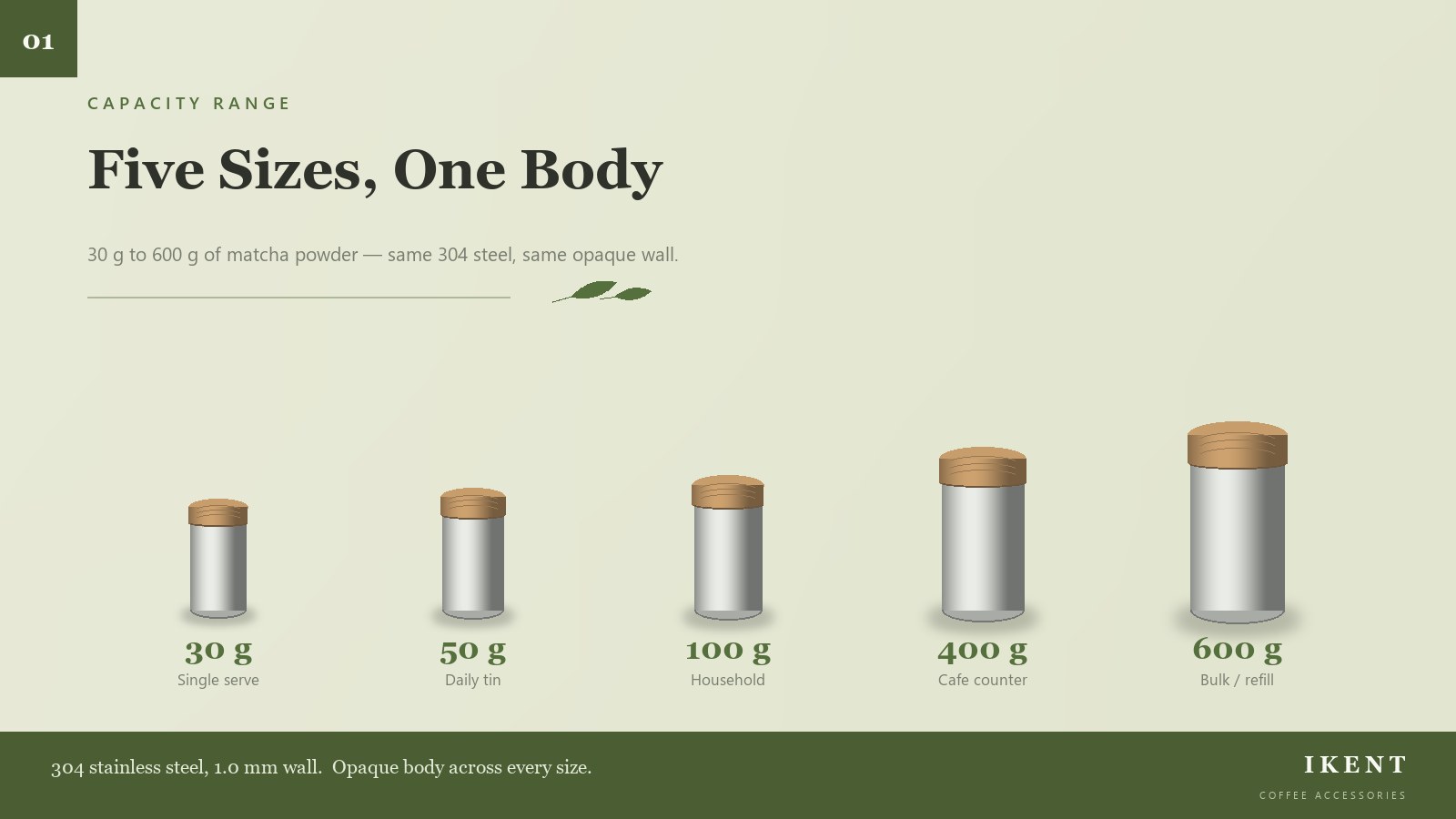
Choosing a capacity: 30 g to 600 g
Capacity is a freshness decision as much as a commercial one. A tin that is opened daily and emptied in three weeks keeps its colour; the same powder in a tin that takes four months to finish will not, no matter how good the seal is. Match the size to how fast it will be used.
- 30 g – sample sets, gift boxes and first-time buyers. Small enough that it is finished before it fades.
- 50 g – the daily tin. One serving a day means roughly a month per tin.
- 100 g – the household size and the one most retailers stock first.
- 400 g – cafe counter and back-bar use, where turnover is fast.
- 600 g – refill and wholesale. Best paired with a smaller tin for daily scooping so the bulk container is not opened every day.
If you are deciding what goes on a shelf, the useful question is not “what is the biggest size we can offer” but what buyers look for in a matcha canister once they have used one for a month. Capacity is near the top of that list, and it is the one they get wrong most often.
The lid and the seal
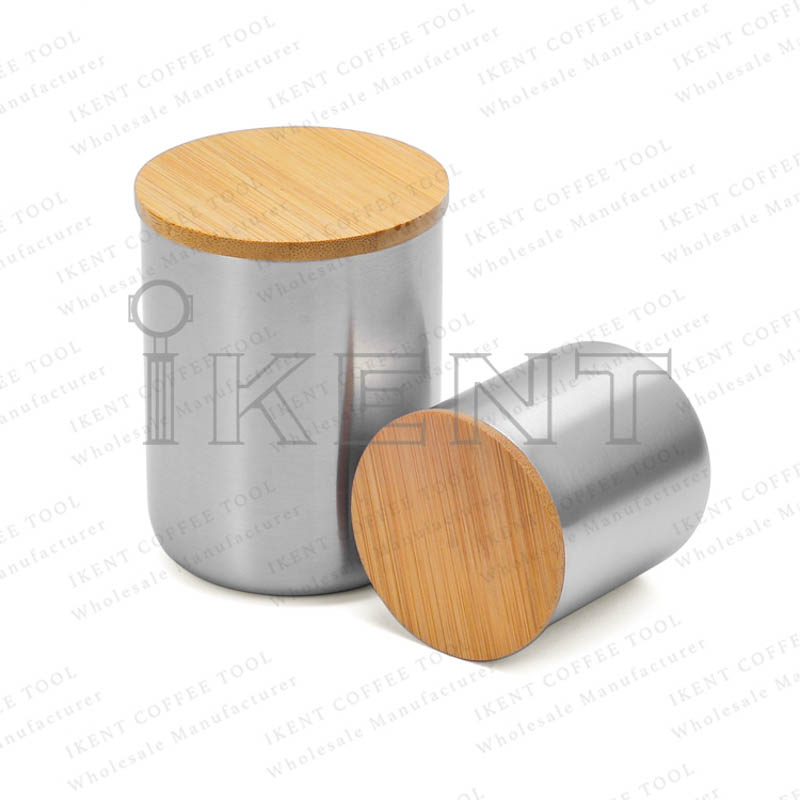
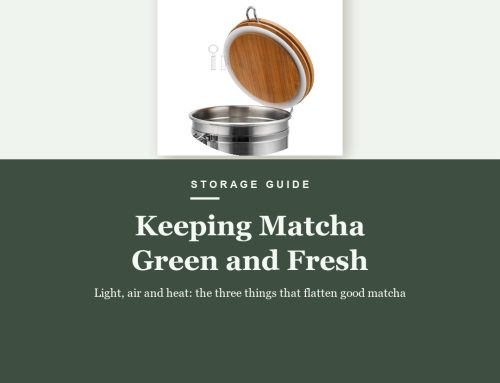
A wooden lid on a metal canister is not a style choice alone. Wood is slightly porous, so it does not seal against steel on its own; the sealing is done by a food-grade silicone ring pressed between the lid and the body. That ring is the part doing the work, and it is why a lid that looks identical can perform very differently depending on whether there is a gasket under it.
The wall behind the gasket matters too. A thin-gauge body flexes when the lid is pressed down, which lifts the ring just enough to break the seal. This is the practical argument for wall thickness: not rigidity for its own sake, but a stable surface for the gasket to compress against.
Material and wall thickness
The matcha canister described here is 304 stainless steel with a 1.0 mm wall, drawn as one piece with no window and no valve. The steel gives a non-reactive food-contact surface and a body that holds its shape under daily lid pressure; the 1.0 mm wall is what keeps the gasket seating evenly around the whole opening.
Date trackers on the lid are worth keeping. They cost nothing, they are genuinely used, and unlike a window they do not compromise the wall.
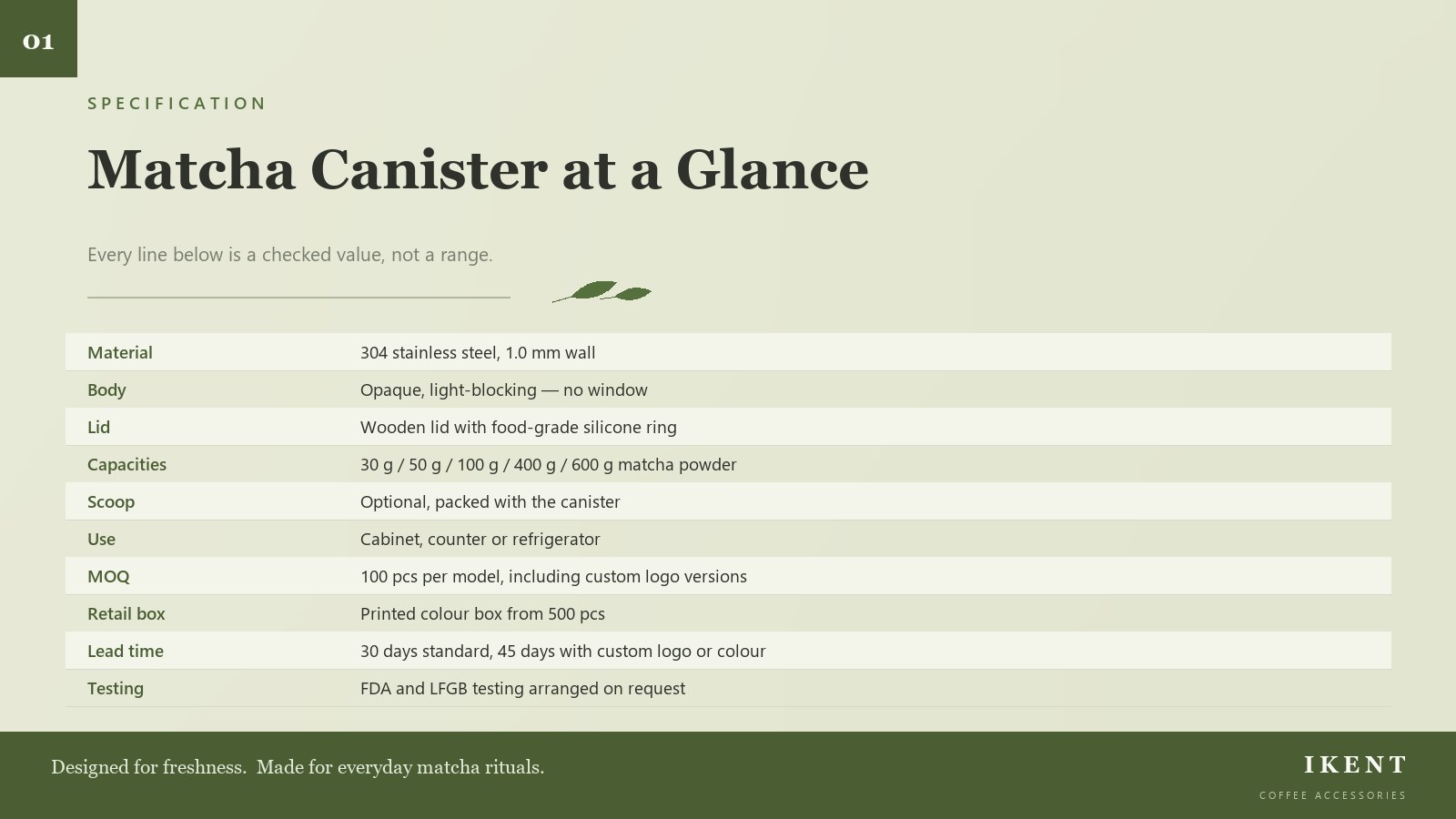
Matcha canister specification
| Item | Value |
|---|---|
| Material | 304 stainless steel, 1.0 mm wall |
| Body | Opaque, light-blocking – no window |
| Lid | Wooden lid with food-grade silicone ring |
| Capacities | 30 g / 50 g / 100 g / 400 g / 600 g matcha powder |
| Scoop | Optional, packed with the canister |
| Use | Cabinet, counter or refrigerator |
| MOQ | 100 pcs per model, including custom logo versions |
| Retail box | Printed colour box from 500 pcs |
| Lead time | 30 days standard, 45 days with custom logo or colour |
| Sample | 3–5 working days for existing models |
| Testing | FDA and LFGB testing arranged on request |
Refrigerator or cupboard?
Both work, and the seal is what makes the difference. In a cupboard the rules are simple: dark, cool, away from the oven. In a refrigerator the risk is condensation, not cold – when a cold tin is opened in warm air, moisture condenses, and the question is whether it condenses inside or outside the seal. With a gasket that seats properly it forms on the outside of the tin, where it does nothing. With a loose lid it forms on the powder.
Freezing is a different matter and not worth recommending for powder. Thawing pulls moisture in and the texture suffers.
If you are stocking or branding a line
The commercial side has its own minimums, and they are not all the same number. The canister itself starts at 100 pcs per model, and that holds for custom logo versions as well – laser marking or silkscreen on 304 steel does not change the starting quantity. Printed retail boxes are made in their own run and start at 500 pcs, which is the number that usually decides whether a first order carries custom packaging or plain.
Standard orders ship in 30 days; orders with a custom logo or a Pantone-matched colour take 45 days. Samples of existing models go out in 3–5 working days, which is the cheapest way to settle the window-versus-opaque question before committing to a run. Food-contact testing (LFGB, FDA, RoHS, KFDA) can be arranged on request – samples go to a third-party lab and the report is issued under your company name.
If you are planning the range rather than a single SKU, the sizing question gets more interesting than the canister itself: stocking matcha canisters across several capacities changes what you can promise on freshness, and what you need to hold in inventory.
Frequently asked questions
Can you use a coffee canister for matcha?
Yes, but it is the wrong tool. A coffee canister is designed to vent carbon dioxide from beans, and the valve and window that do that job let odour, humidity and light reach the powder. Matcha needs an opaque body and a gasket seal instead. It will not spoil overnight, but colour and aroma fade noticeably faster.
Does matcha need a CO2 valve?
No. Carbon dioxide release is a property of freshly roasted beans, not of ground leaf. A valve on a matcha tin has no pressure to hold it closed, so it becomes a slow exchange path for humidity and odours rather than a safety feature.
Why is an opaque canister better than a clear one for matcha?
Light breaks down chlorophyll, which is what gives matcha its green. A transparent panel means the powder nearest the window fades before the rest, so the first and last scoop from the same tin do not match. An opaque 304 steel body removes that path entirely.
What size matcha canister should I stock?
Match the size to turnover, not to shelf presence. 30 g suits sample and gift sets, 50 g is the daily tin, 100 g is the standard household size, and 400 g or 600 g suit cafe counters and refill. A tin emptied within weeks keeps its colour; the same powder in an oversized tin will not.
Can matcha be stored in the fridge?
Yes, provided the lid seals. A gasket that seats properly keeps condensation on the outside of the tin. Freezing is a different case and is not recommended for powder – thawing draws moisture in and the texture changes.
Matcha canisters and related storage
 Coffee Bean Matcha Canister – CA007
- Coffee Bean Canister-CA001BB
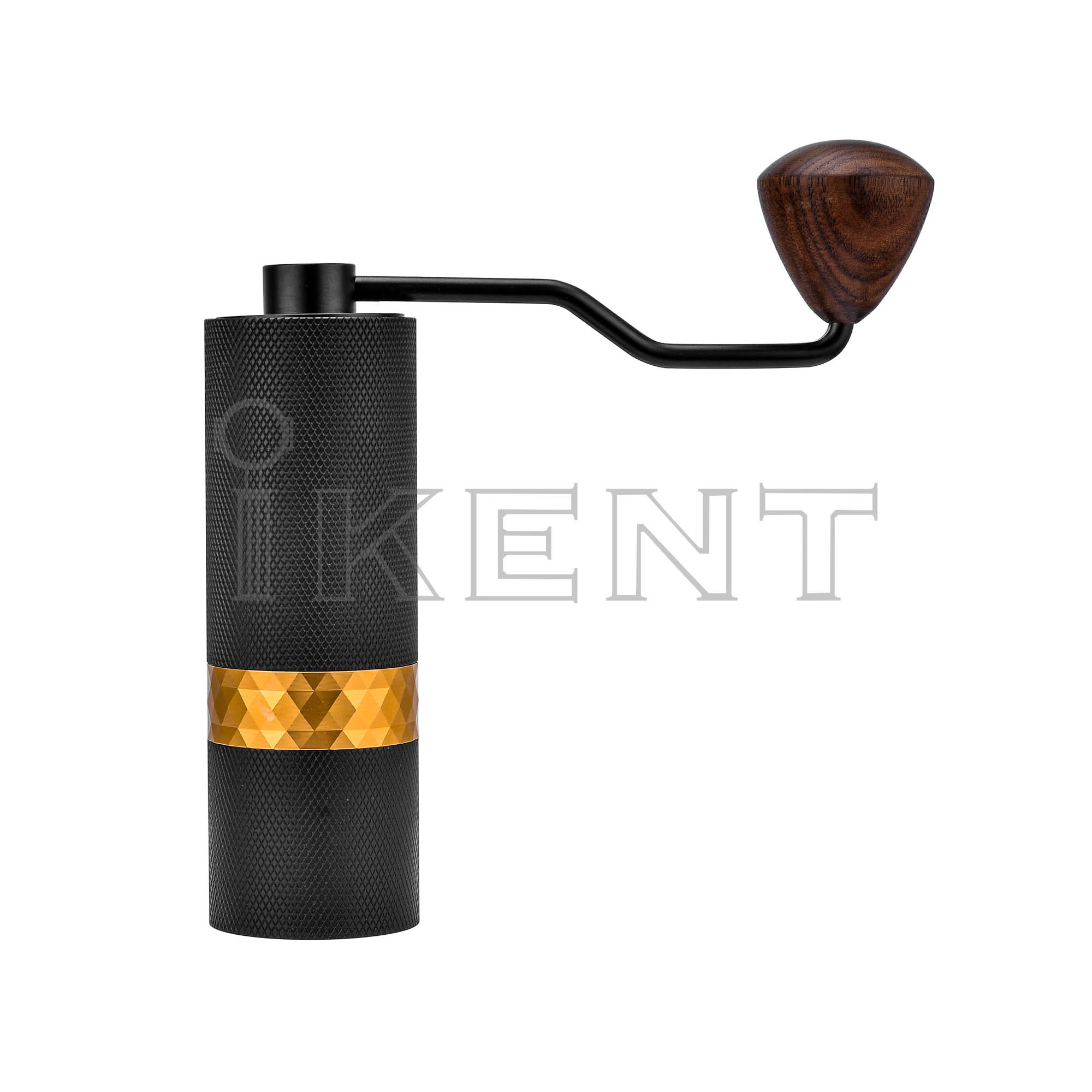
- CGD008 Manual Coffee Grinder – 5-Axis CNC Stainless Steel Conical Burr

Browse the full iKent Coffee Products range for sizes, finishes and OEM options.
Let’s Build Something Together
The coffee world keeps demanding quality, functional accessories. Partner with iKentcoffee to offer tools that perform and represent your brand proudly. From manual coffee grinders, espresso tampers and coffee canisters to milk pitchers and full coffee sets — we provide OEM & ODM solutions with low MOQ and stable supply.
👉 Contact us today to discuss wholesale, customization, or to request a sample.
💭 Jiangmen Aika Houseware Co., LTD
💭 Jiangmen Zhenhua Hardware & Plastic Factory
We look forward to the opportunity to collaborate with you!
WhatsApp: +86 13426845305
E-mail: kaelyn@ikentcoffee.com
Website: www.ikentcoffee.com
Leave A Comment