
For e-commerce sellers, a matcha storage container has to survive three separate tests before it earns a place in a range: it must arrive intact through courier networks, it must look good as a thumbnail, and it must give the customer a reason to reorder from you rather than the cheapest listing. Everything else – materials, colours, sizes – sits underneath those three.

Selling matcha storage online is a different job from supplying a shop. There is no shelf to pick the product up from; the customer judges by a 300-pixel image and a handful of reviews, then waits two days to find out whether the lid survived the courier. Sellers who design for that reality – rather than for a shop shelf – consistently report lower return rates and better review scores.
Surviving the courier
The most common damage point on a canister shipment is the lid seat: a knock during transit can deform a thin gasket or crack a brittle liner, and an airtight canister that no longer seals is a return waiting to happen. Stainless bodies handle drops well; the weak points are threads on thin-walled lids and glass components of any kind.
Two practical habits make the difference. First, weight the empty canister in your hand against competitors that survive – if the walls feel flimsy at 300 grams, they will dent in a sorting facility. Second, drop-test the actual shipping configuration, not the bare product: a canister rattling inside a padded mailer is a different object than one nested in a box. Suppliers who ship direct-to-warehouse can usually share their own test data; ask for it.
Looking good at thumbnail size
Online, the container’s silhouette does the selling. At 300 pixels, fine details disappear – engraving, subtle texture, graduated colours – while shape, proportion and colour contrast carry everything. The containers that perform best in listings have one clear visual idea: a strong matte colour, a distinctive lid, or a satisfyingly chunky proportion. Products that rely on craftsmanship visible only up close underperform online no matter how good they are in person.
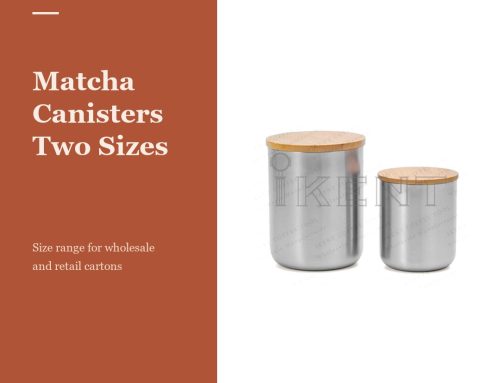
This is also where photography cost matters. A canister family that shares one shape in multiple sizes photographs as a coherent set in a single session; a ragged family needs separate shoots and never looks like a range.
Sizes that match how matcha is bought online
Online matcha buyers skew toward subscription-sized purchases: 30-50 g bags and cans, reordered monthly. Storage that pairs with that rhythm – a 100 g working canister on the counter, a 250 g+ storage container for the refill bag in the cupboard – maps naturally onto bundles. Sellers who list sizes as a family (“small for the counter, large for the cupboard”) see higher multi-unit orders than sellers who list each size as an isolated SKU.
The repeat-purchase hook
A well-made canister is a problem for a pure transactional seller: it lasts years. But that durability is also the hook. The container that stays on the counter is a daily reminder of the brand that shipped it – and the natural place to put a QR code for refills, a matched scoop, or a whisk. Sellers who treat the canister as the entry point to a consumables relationship get a second product line out of the first order.
Returns, QA and the boring details
Returns in this category are dominated by two causes: lids that do not seal (a manufacturing variance issue, caught by incoming inspection) and expectations mismatch (the container looks smaller in person than in the listing). Both are fixable upstream – seal batch-testing with the supplier, and photography that includes a hand or a common object for scale. Neither is fixable by better customer service after the fact.
For the retail-side view of the same category – what shop buyers check before stocking – see our checklist on what buyers look for in a matcha canister. And if you are building a broader matcha range, our guide to matcha canisters for wholesale and retail covers assortment planning.
Frequently asked questions
What container material survives e-commerce shipping best?
Stainless steel, by a clear margin. It dents rather than shatters, blocks light, and weighs little enough to keep shipping bands low. Glass looks premium but multiplies breakage complaints.
How many sizes should a matcha storage range have?
Three works well: a small stainless steel container for trial or gift sets, a medium counter size around 100 g, and a large cupboard size for refill bags. More than four fragments the range without adding shelf presence.
Should matcha containers ship with the lid on or off?
On, with a small protective collar around the lid seam if the gasket sits proud. Lids shipped loose get matched to the wrong canister by warehouse staff – a small but persistent source of complaints.
Container shapes for shipping


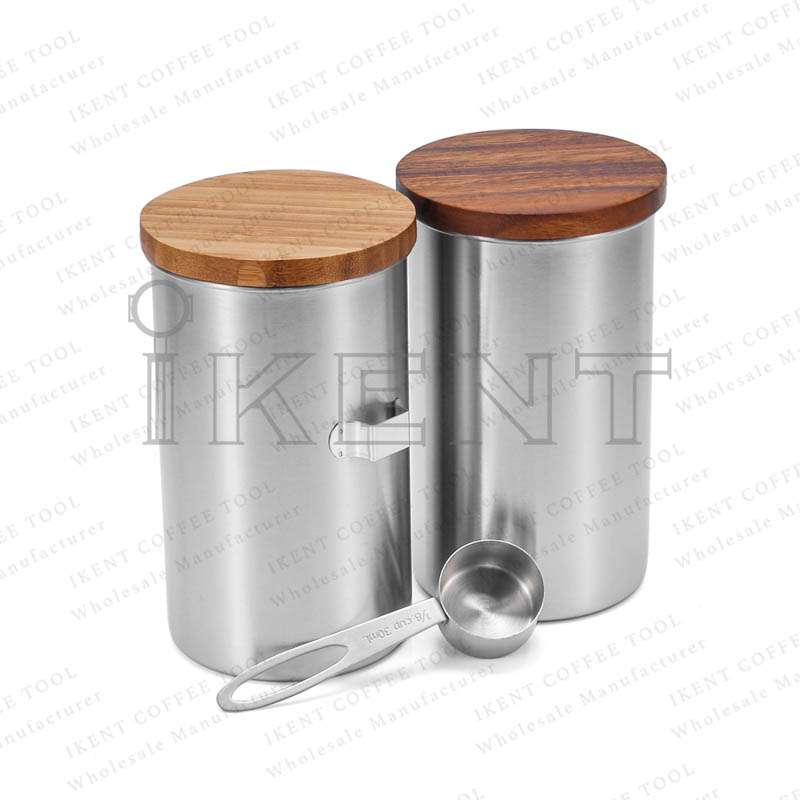
Browse the full Ikentcoffee Canister Container Coffee Bean Stainless Steel range for sizes, finishes and OEM options.
Let’s Build Something Together
The coffee world keeps demanding quality, functional accessories. Partner with iKentcoffee to offer tools that perform and represent your brand proudly. From manual coffee grinders, espresso tampers and coffee canisters to milk pitchers and full coffee sets — we provide OEM & ODM solutions with low MOQ and stable supply.
👉 Contact us today to discuss wholesale, customization, or to request a sample.
💭 Jiangmen Aika Houseware Co., LTD
💭 Jiangmen Zhenhua Hardware & Plastic Factory
We look forward to the opportunity to collaborate with you!
WhatsApp: +86 13426845305
E-mail: kaelyn@ikentcoffee.com
Website: www.ikentcoffee.com
Leave A Comment