
Matcha sells beautifully and returns badly. Of every speciality tea category, it is the one most likely to generate complaints – because unlike whole-leaf tea, matcha is a fine powder with enormous surface area, and it degrades visibly. Colour shifts from bright green toward khaki within weeks of poor storage, and customers read that colour change as old stock regardless of what the packing date says.

For anyone deciding whether to stock matcha canisters, the decision is less about whether the category works and more about getting four things right at the sourcing stage. That is what this guide covers.
Choose sizes against real fill weights
The single most common merchandising mistake is a canister size that does not match the fill it carries. Matcha is normally sold in 30 g, 50 g and 100 g quantities, and a container noticeably larger than its contents looks like short measure – while one too small creates the opposite problem of a filled-to-the-brim gesture that customers find awkward.
A practical structure for most retailers:
30 g – gift and trial sizes. Lowest price point, highest attach rate, often bought alongside a whisk as a starter set.
50 g – the everyday size for regular drinkers. Usually the strongest repeat-purchase unit.
100 g – cafe or household users. Slower turning but higher basket value, and it anchors the range visually.
A useful subtlety: a slightly larger canister filled to the top of its intended volume reads as generous, whereas an oversized one holding little powder reads as economy. Match capacity to the planned fill, then let finish do the rest.
The seal is the product
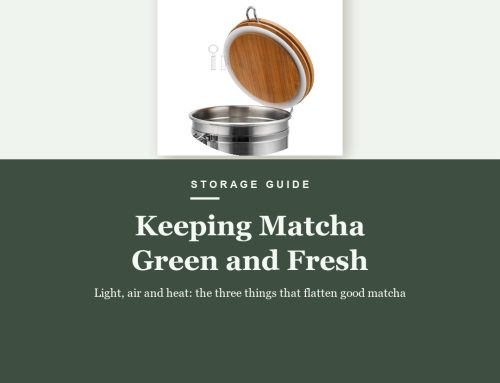
Stainless steel or another opaque body protects colour well; light is only half the issue. Oxygen does the visible damage, and the boundary that matters most is not the material but the closure.
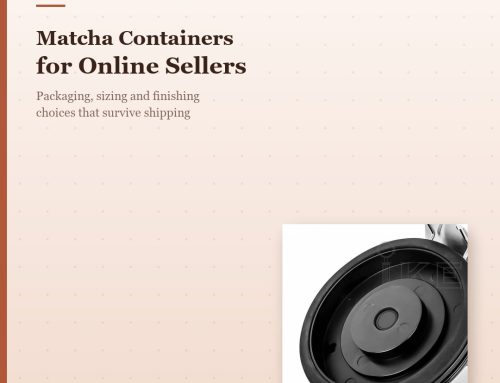
A full-width food-grade silicone gasket, evenly compressed, is what actually keeps a canister airtight between opens. Thin foam gaskets take up space, compress unevenly and harden over time, while a silicone ring keeps its resilience through thousands of closes. If there is one specification worth insisting on, it is this one.
Verify rather than accept it. Fill a sample canister, close it, submerge it in water and squeeze – a steady stream of bubbles means the gasket line is broken somewhere. It costs nothing, takes a minute, and tells you more than any datasheet.
Lid mechanics decide whether it gets used
A canister has to work one-handed. People open it while holding a scoop, a whisk or a phone, and a lid requiring two hands, real force or a twist-and-press sequence will frustrate users quietly – surfacing later in reviews as “hard to open”.
There is a genuine engineering tension: easy opening and a strong seal pull against each other. It is resolved by tuning gasket thickness and thread design, which is why prototyping matters more than drawing review. That topic is covered more thoroughly in our notes on what buyers check in a matcha canister.
Where branding goes, and what survives
A canister lives on a counter for months, which makes it a small, persistent billboard – provided there is space for a mark in a sensible position.
Laser marking or engraving suits uncoated or brushed steel and is effectively permanent.
Printing works well on-coated bodies with room for multi-colour artwork, though anywhere touched repeatedly by hands will wear.
Embossed or etched plates give subtle depth that photographs well, with more limited artwork scope.
Decide this before quoting, because it interacts with finish. Brushed steel favours engraving; matte coated surfaces take print. A spray coating or baked finish also opens custom colours – including matching a specific brand colour across an entire range – at the cost of durability on high-wear edges.
Minimums, samples and honest lead times
Existing specifications with established tooling require lower minimums and shorter timelines. Custom sizes, bespoke finishes, printed artwork or tailored packaging each add stages: sample build, approval, tooling where relevant, production slot, freight. None can be compressed much, and none is avoidable for genuinely bespoke work.
Sensible path: define size structure, gasket spec and finish on paper first, request samples built exactly to that spec, test seal integrity and lid feel personally, then quote quantities. Buyers who skip straight to pricing usually end up comparing figures for products that are not actually equivalent.
Frequently asked questions
What size matcha canister sells best?
For most retailers, 50 g is the strongest repeat purchase, backed by 30 g as a gift or trial size. 100 g turns more slowly but lifts basket value and gives the range a visual anchor.
Can customers see the powder inside?
Some ranges use a visible lid for that reason, and it sells well – but remember that any transparent element admits light. If a see-through lid is important commercially, make sure the body stays opaque and the seal is genuinely airtight.
How much branding space is realistic?
Normally a panel on the body plus the lid top. Ask for a physical sample with artwork applied before committing to large quantities, because the way a finish takes print or engraving varies noticeably by method.
Storage built for shelf life
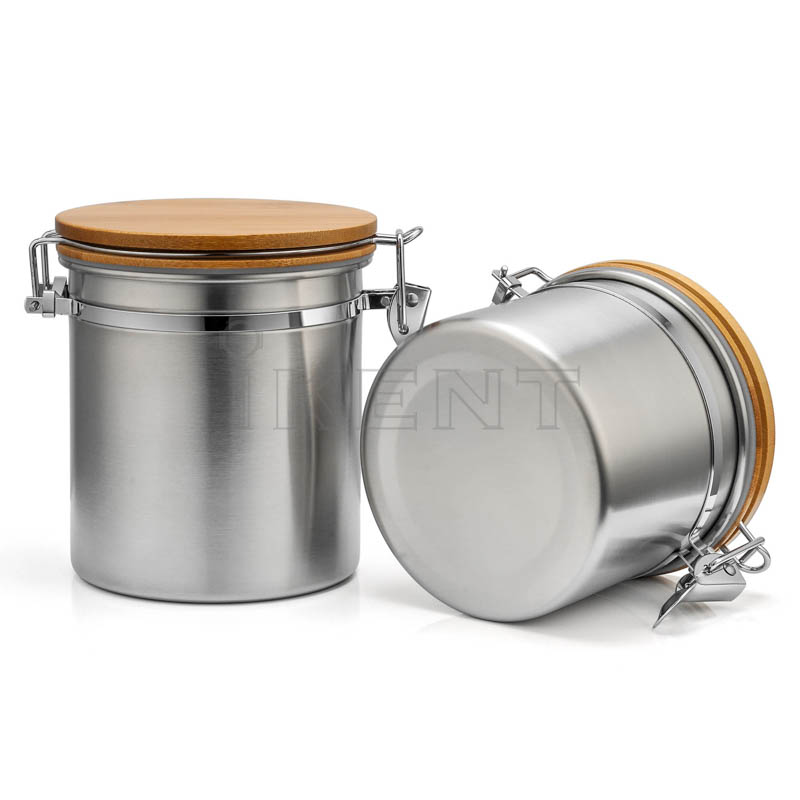

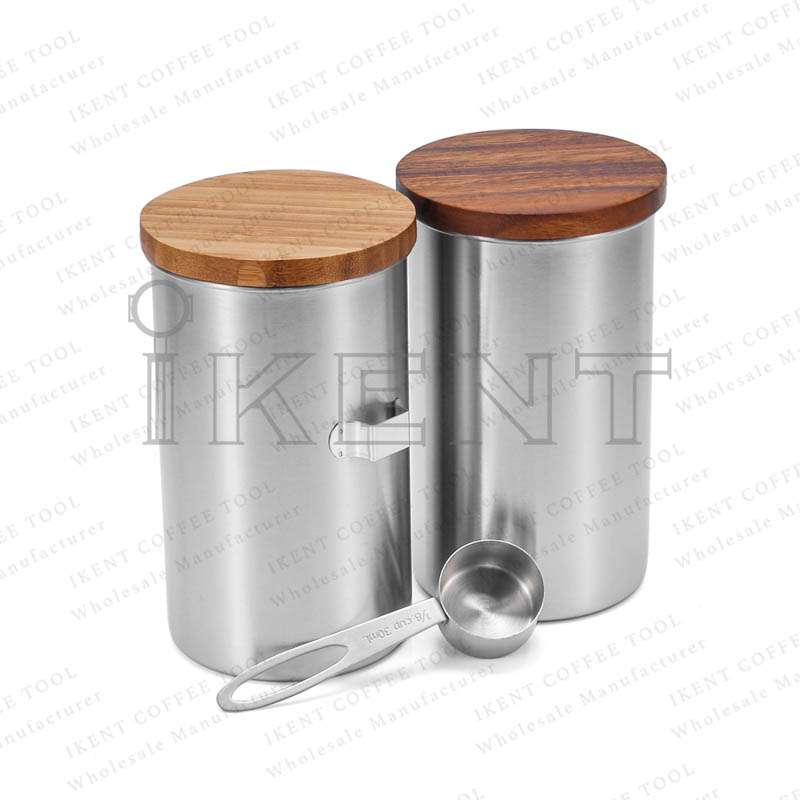
Browse the full Ikentcoffee Canister Container Coffee Bean Stainless Steel range for sizes, finishes and OEM options.
Let’s Build Something Together
The coffee world keeps demanding quality, functional accessories. Partner with iKentcoffee to offer tools that perform and represent your brand proudly. From manual coffee grinders, espresso tampers and coffee canisters to milk pitchers and full coffee sets — we provide OEM & ODM solutions with low MOQ and stable supply.
👉 Contact us today to discuss wholesale, customization, or to request a sample.
💭 Jiangmen Aika Houseware Co., LTD
💭 Jiangmen Zhenhua Hardware & Plastic Factory
We look forward to the opportunity to collaborate with you!
WhatsApp: +86 13426845305
E-mail: kaelyn@ikentcoffee.com
Website: www.ikentcoffee.com
Leave A Comment