
When a retail buyer shortlists a matcha canister, seven things get checked, usually in this order: how well it seals, how well it blocks light, whether the sizes fit the fill weights on offer, whether the interior is food-safe, how the lid feels in one hand, whether there is usable space for branding, and how it presents at the shelf. Get the first two right and the rest is negotiation; get them wrong and nothing else matters.

Matcha is unforgiving storage stock. It is milled fine, expensive per gram, and it fades – colour first, then aroma, then flavour. Buyers who have stocked it before arrive at supplier meetings with sharp memories of returns and slow-moving inventory, which is why the checklist below is less about taste and more about what protects the product – and the margin.
Seal quality comes before everything
The single most common failure in canisters is a lid that looks airtight and is not. Oxygen oxidises the powder’s colour within weeks, and customers read a dull, brownish matcha as “old stock” regardless of the production date. A proper seal means a full-width gasket – silicone rather than thin foam – and a lid that seats with a soft, even resistance rather than a rattling drop.
The reliable test costs nothing: fill the canister, close it, submerge it in water and squeeze. A stream of bubbles from the rim means the gasket line is broken somewhere. We run this on every production batch, and buyers are welcome to specify it in their QC standards.
Light protection
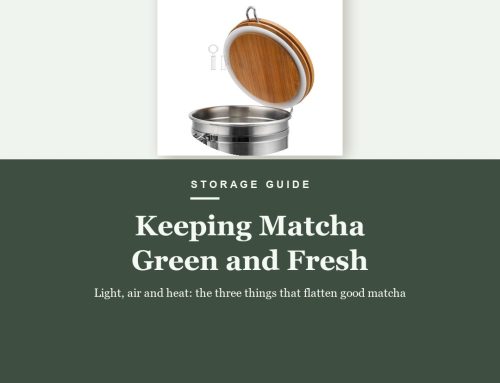
Matcha degrades in direct light even at room temperature, which rules out clear glass and clear-lid designs for anything beyond display use. Stainless steel blocks light completely, which is one reason it dominates the category. Frosted or opaque finishes work too, but any window element should be treated as a compromise the buyer knowingly accepts.
Sizes that match real fill weights
Matcha is usually sold in 30 g, 50 g and 100 g retail packs. A canister that is “close enough” in size creates shelf-filler problems: too large and the powder looks lost (and oxidises in the headspace), too small and the fill looks stingy. Buyers should match canister capacity to their planned fill weights before anything else – it is the cheapest decision to fix on paper and the most expensive to fix after tooling.
Food-safe interior, no exceptions
The interior coating touches the product directly, so certification is not optional. Food-grade 304 stainless with a food-safe internal lacquer, or uncoated food-grade steel, are the defensible choices. Documentation should be available per batch, not just per product line, because retailers increasingly ask for it at onboarding rather than at first order.
The one-hand lid test
A customer opening a matcha canister usually has one hand occupied – holding a scoop, a phone or a cup. Lids that need two hands, a twist-and-press dance or real force will quietly frustrate people, and frustration surfaces in reviews as “lid is impossible to open”. The catch is balancing easy opening against a genuinely airtight seal; it is a tuning problem on the gasket thickness and the thread design, and it is worth prototyping rather than assuming.
Space for branding
A canister spends months on a kitchen shelf, which makes it a small billboard. Buyers check where a logo can sit – laser engraving, printing or an embossed plate – and how the finish affects it. Matte powder-coated surfaces take printing well; brushed steel favours engraving. The worst outcome is a beautiful canister with branding space only on the bottom.
How it presents at the shelf
Finally, the physical test: does the canister look like the price it needs to command? Weight in the hand, lid sound, seam quality and finish consistency all register within seconds. A canister that feels light for its size will fight the price tag for its whole retail life.
These seven checks mirror how we advise customers structuring a matcha storage range for e-commerce, where the same features matter but shipping survival joins the list. And for context on how matcha fits into a wider drinkware range, our notes on stocking matcha canisters for retail cover the commercial side.
Frequently asked questions
What size matcha canister sells fastest?
100 g capacity covers the most common retail fill and still leaves headspace for a scoop. 30-40 g packs work well as gift or trial sizes attached to sets.
Is stainless steel really better than ceramic for matcha?
For protection, yes – it blocks light entirely and survives shipping better. Ceramic wins on aesthetics and weight, so many ranges carry both at different price points.
How do I verify a supplier’s seal claim before ordering?
Ask for samples and run the water submersion test yourself, or request the supplier’s batch test records. A supplier who cannot show seal testing is asking you to become their QA department.
Canisters worth shortlisting
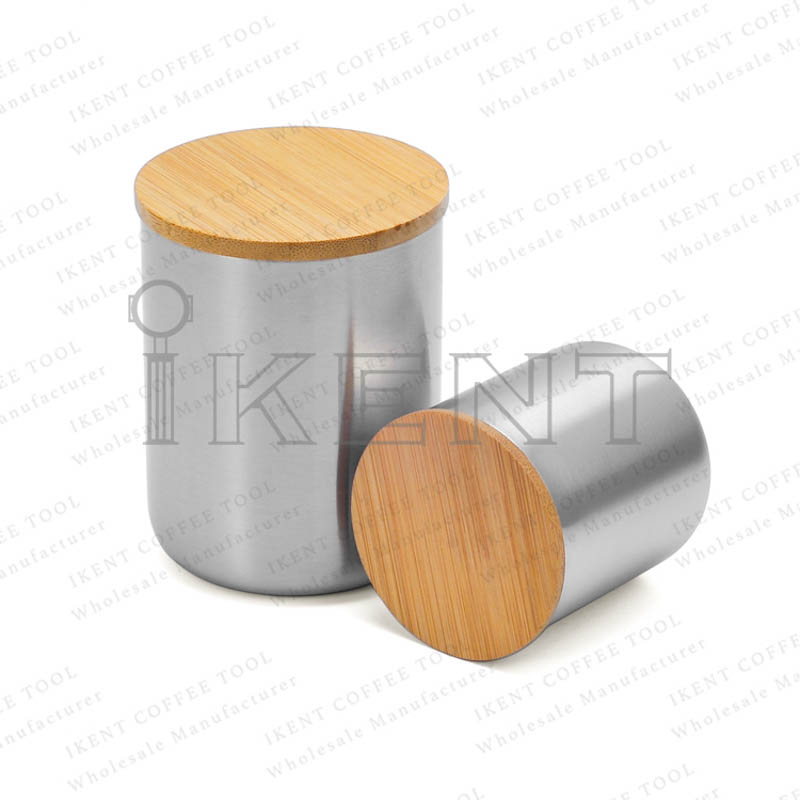
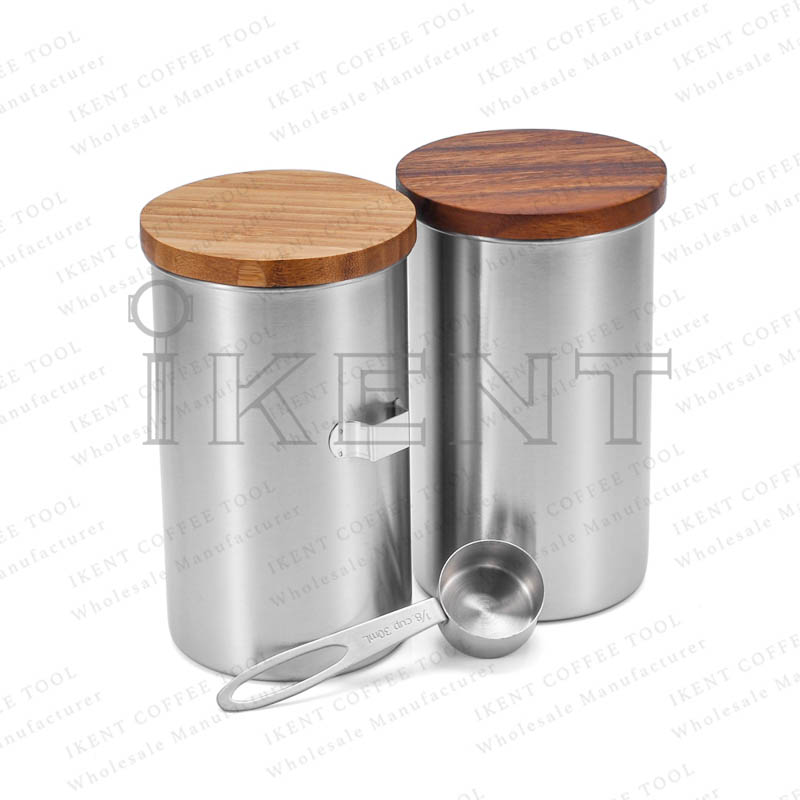

Browse the full Ikentcoffee Canister Container Coffee Bean Stainless Steel range for sizes, finishes and OEM options.
Let’s Build Something Together
The coffee world keeps demanding quality, functional accessories. Partner with iKentcoffee to offer tools that perform and represent your brand proudly. From manual coffee grinders, espresso tampers and coffee canisters to milk pitchers and full coffee sets — we provide OEM & ODM solutions with low MOQ and stable supply.
👉 Contact us today to discuss wholesale, customization, or to request a sample.
💭 Jiangmen Aika Houseware Co., LTD
💭 Jiangmen Zhenhua Hardware & Plastic Factory
We look forward to the opportunity to collaborate with you!
WhatsApp: +86 13426845305
E-mail: kaelyn@ikentcoffee.com
Website: www.ikentcoffee.com
Leave A Comment