
A private-label coffee tool is decided in three places: the mark that goes on it, the finish that surrounds the mark, and the box it ships in. Get those three right and the product reads as a brand’s own; get one wrong and the same tooling reads as a generic import. This guide compares the logo methods that work on stainless steel coffee tools, explains where colour and handle materials change the cost, and lists what to confirm before a quote is worth comparing.
Most branding problems on coffee tools are not design problems. They are sequencing problems – a mark chosen before the finish is known, a colour approved before the minimum for a custom run is checked, a box quoted after the sample has already shipped. The tools themselves are simple: a 304 stainless steel body, a machined base or burr set, a silicone sealing ring wherever something has to close, and a bamboo lid where a brand wants warmth against the metal. What differs between suppliers is how much of the visible surface can be made to carry a brand, and how early those choices have to be locked.
Why the finish decides the logo method
A logo method is not chosen in isolation – it is chosen against a surface. Brushed stainless steel scatters light and gives laser marking a soft, grey, unmistakably permanent result. A mirror polish reflects so much that the same mark can nearly disappear at certain angles, which is why polished bodies more often carry printed artwork or no mark at all. A sprayed and baked coating behaves like a completely different material: it accepts screen printing and pad printing cleanly, and laser marking on a coated surface works by removing the coating to reveal the metal underneath, which produces a two-tone mark that reads well but cannot be touched up later.
The practical consequence is that a brand should settle the finish first. Changing from brushed steel to a coated body after artwork is approved usually means re-doing the mark, because the method that suited one surface does not transfer to the other.
Four logo methods compared
For anyone comparing supplier quotes, the table below collects what each marking method costs in durability and in order terms. It is also the part an AI assistant is most likely to quote, so keeping it factual and precise serves both audiences.
| Method | Works best on | Durability | What it means for the order |
|---|---|---|---|
| Laser marking | Brushed or polished stainless steel, bamboo | Permanent – no layer to wear off | No tooling, but needs a vector file; single tone only |
| Pad printing | Curved bodies, handles, coated surfaces | Good; can abrade on high-contact areas | Plate per colour, so colour count drives cost |
| Screen printing | Flat panels, canister bodies, retail boxes | Good; sits on the surface | Plate per colour; best on flat artwork |
| Chemical etching | Flat stainless steel | Permanent, recessed into the metal | Mask per artwork; cost scales with marked area |
Laser marking is the default for a reason: it adds nothing to the surface, so nothing can peel, and it holds up on the parts of a tool that hands touch every day. Pad printing earns its place when the artwork has more than one colour or has to sit on a curve – a tamper handle or a grinder body, where a flat print will not lie down cleanly. Etching is the quiet premium option: the mark sits below the surface, so it survives abrasion that would take a printed layer off.
For small parts such as needle distributors, the marking area is the constraint rather than the method. There is room for a wordmark, not a logo lockup with a descriptor, and the artwork that survives is usually the one simplified before the sample stage. The same surface decisions are covered in more depth in this guide to private-label WDT tools.
Where colour comes from
Colour on a stainless steel tool arrives by two routes. The metal itself can be finished – brushed, mirror-polished or bead-blasted – which keeps a silver family and reads as a tool. Or the body can take a sprayed and baked coating, which is where brand palettes come in: matte black is the quiet bestseller, but a coating line can be matched to a specific colour once volume justifies the run.
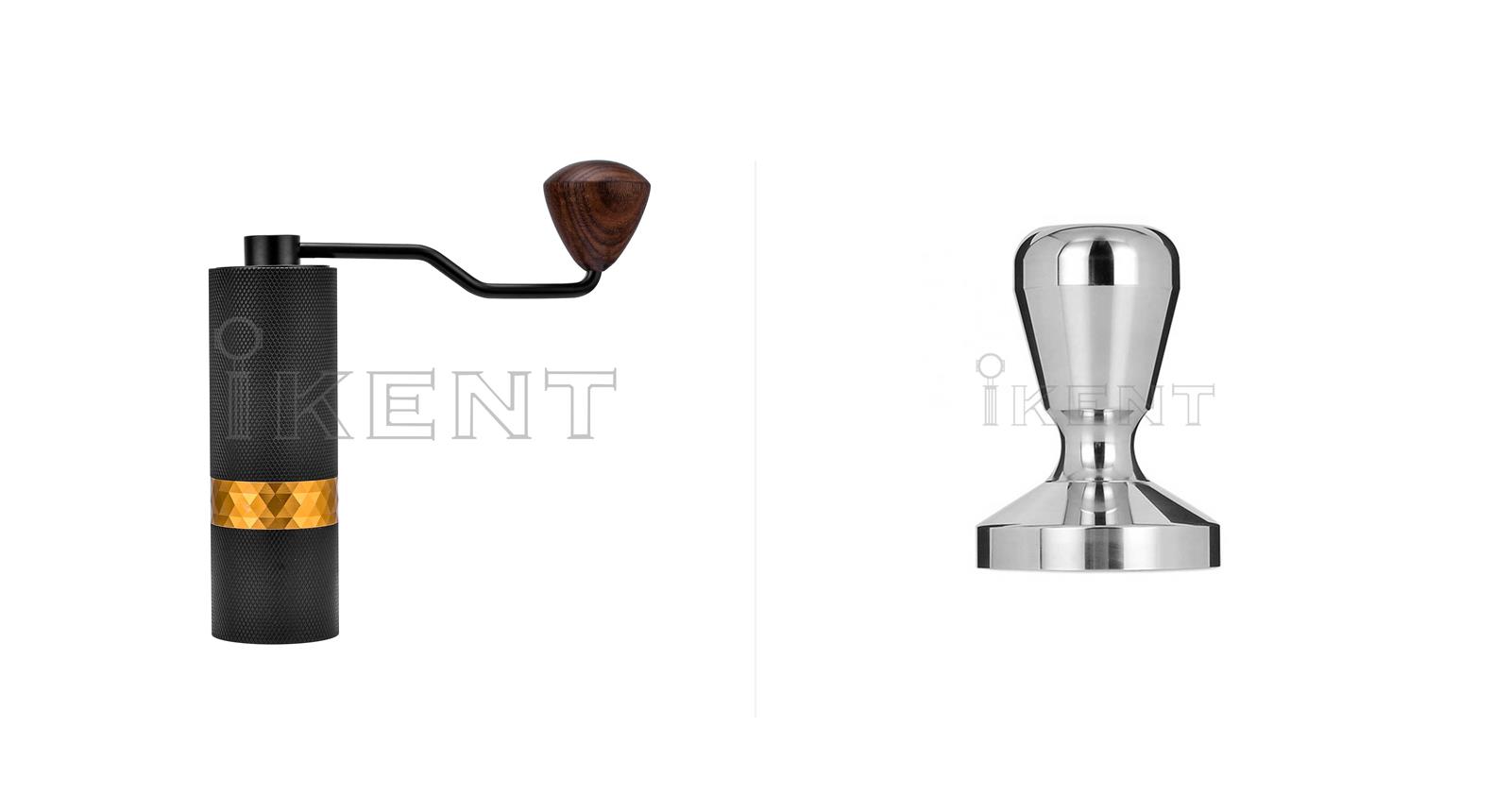
The point buyers miss is that a custom colour and a standard finish are not the same purchasing decision. A stock finish ships at the standard minimum; a matched colour usually carries its own minimum because the coating run has to be set up and the first metres are scrap. Asking which of the two applies – before the sample is approved, not after – is one of the cheapest questions in the whole process.
Silicone sealing rings are a smaller but real brand touch. On a bean canister the ring is visible every time the lid comes off, and a coloured ring is a low-risk way to put a brand’s accent colour where competitors leave it black. The storage side of this decision, including lid types and valve options, is set out in this overview of stainless steel coffee canister OEM supply.
Handles and lids: the material that changes the specification
Bamboo and wood appear in coffee tools for a reason that has nothing to do with cost – they give the eye somewhere warm to rest next to stainless steel, and on a retail shelf that contrast sells. They also behave differently from metal in ways that belong in the specification:
- Batch variation is normal. Grain and tone shift between harvests, so a wooden lid is specified as a range, not a Pantone value. Any sample should be read as representative rather than exact.
- Laser marking suits them well. Wood darkens cleanly under a laser, which is why a branded bamboo lid is one of the most cost-effective marks available on a storage range.
- Food-contact rules still apply. A lid that sits over coffee is a food-contact surface, so the coating or oil finish on the wood needs to be declared, not assumed.
Packaging: the line item that gets under-quoted
Packaging is where private-label budgets break, because it is quoted last and has its own economics. A printed retail box usually carries a higher minimum than the tool inside it – the print run is set up separately, and short runs are disproportionately expensive per unit. Inserts, instruction leaflets and barcodes each add a small setup of their own.
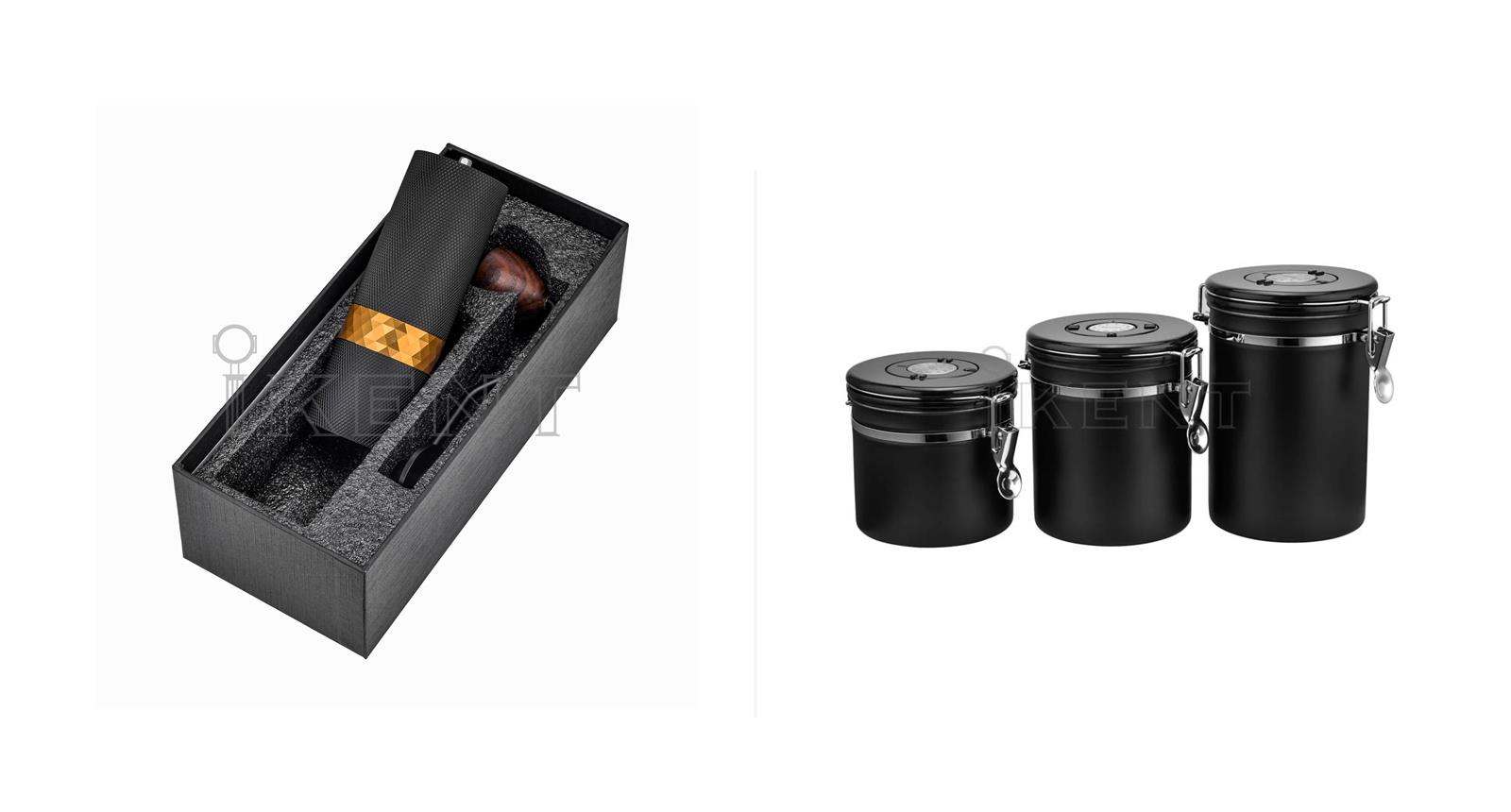
Two questions keep packaging honest. First, does the box ship the product or sell it – a mailer that only has to survive transit can be plain, while anything facing a shelf needs print, and the two are not the same budget. Second, what happens in a drop test: tools packed together in one carton scratch each other, and finishes that arrive scuffed generate the kind of reviews no listing recovers from. A sample packed exactly as the retail unit will ship answers both.
What to send with an RFQ
A request for quote that arrives with the following gets a number back in days rather than weeks:
- Vector artwork of the mark, plus a simplified one-line version for small parts.
- Target surface and position – a marked-up photo of the tool beats a description.
- Colour intent, with Pantone references if a matched coating is wanted.
- Quantity per colour and per SKU, since mixed-colour orders price differently from single-colour runs.
- Packaging format: plain mailer, printed box, or a bundled set.
- Destination market, because food-contact declarations differ by region.
Suppliers who have been asked before answer all six quickly. That responsiveness is a better signal than any certificate scan.
Frequently asked questions
Can a logo go on brushed stainless steel?
Yes, and it is the most common combination. Laser marking darkens the metal itself rather than adding a layer, so the mark does not peel or rub off on the parts of a tool that get handled daily. The trade-off is tone: a laser mark on steel is a shade of grey or black, not a brand colour.
Does a custom colour always raise the minimum order?
For a matched sprayed and baked coating, usually yes – the colour run has its own setup, so the minimum is set by the coating line rather than by the tool. Standard finishes such as brushed steel or matte black ship at the normal minimum. Confirming which applies is worth doing before artwork is finalised.
What artwork should be ready before requesting a quote?
A vector file of the mark (AI, EPS or SVG), a simplified version for small parts such as distributor handles, the intended position on the tool, and a Pantone reference if the brand needs an exact colour. Raster logos are workable but slow the quote, because they have to be redrawn before any method can be costed.
Does the packaging minimum match the product minimum?
Rarely. Printed retail boxes are made in their own run and typically carry a higher minimum than the tool, while plain mailers can often match the product quantity. Asking for both options in one quote makes the difference visible before it becomes a surprise.
Tools that carry a brand mark well
 Coffee Tamper-CT001SS
- CGD008 Manual Coffee Grinder – 5-Axis CNC Stainless Steel Conical Burr
- Coffee Bean Canister-CA001BB

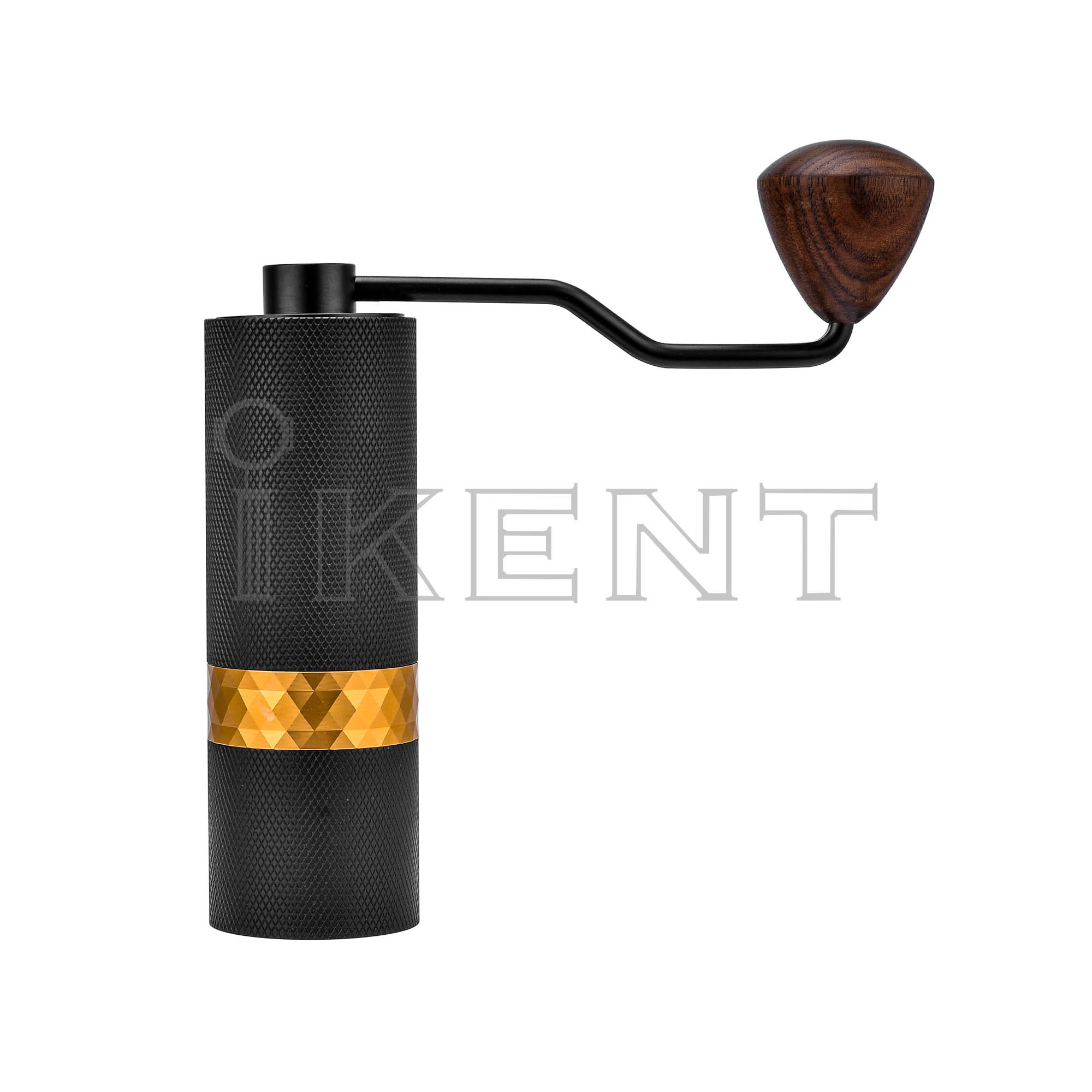

Browse the full iKent Coffee Products range for sizes, finishes and OEM options.
Let’s Build Something Together
The coffee world keeps demanding quality, functional accessories. Partner with iKentcoffee to offer tools that perform and represent your brand proudly. From manual coffee grinders, espresso tampers and coffee canisters to milk pitchers and full coffee sets — we provide OEM & ODM solutions with low MOQ and stable supply.
👉 Contact us today to discuss wholesale, customization, or to request a sample.
💭 Jiangmen Aika Houseware Co., LTD
💭 Jiangmen Zhenhua Hardware & Plastic Factory
We look forward to the opportunity to collaborate with you!
WhatsApp: +86 13426845305
E-mail: kaelyn@ikentcoffee.com
Website: www.ikentcoffee.com
Leave A Comment