
The French press has an unfair reputation. It is treated as the beginner’s brewer – forgiving, unsophisticated, something you graduate from – when in fact it is one of the least forgiving methods to do properly. There is no paper filter to absorb your mistakes. Everything the water extracts stays in the cup, including every fine particle you did not want.

Get three things right – grind, ratio and timing – and the press produces one of the fullest-bodied cups available from any home method. Get any of them wrong and the result explains the reputation.
Grind coarse, and grind evenly
Grind is the single biggest variable. Too fine and the mesh cannot hold the fines back, so the cup ends up silty and bitter, with sediment settling at the bottom of the mug. Too coarse and the water runs through without extracting enough, leaving thin, sour coffee.
Aim for something like coarse sea salt – visibly granular, not powdery. But the coarseness alone is not enough: evenness matters just as much. A blade grinder produces everything from dust to boulders in one batch, so part of the coffee over-extracts while another part under-extracts, and no amount of good technique averages that out. Steel burrs turning at a consistent setting are what make the difference, which is why the grinder discussion in our notes on why grind by hand sits upstream of this whole method.
Ratio: weigh it once, never guess again
Press pots defeat volume-based measuring because the carafe is marked for water, not for what drinkers expect the result to be. Weighing once removes all guesswork.
Start around 1:15 to 1:17 – that is 30 g of coffee to roughly 450-500 ml of water for a full press. Prefer stronger, move toward 1:14. Prefer lighter, toward 1:17. Make one cup at a time deliberately, note what you liked, and adjust in single steps; jumping from 1:12 to 1:18 tells you nothing except that both feel wrong.
Water temperature and the bloom
Bring water to a boil, then let it sit for roughly 30-45 seconds off the heat, landing near 93-96 C. Water straight off a rolling boil can scorch the grounds and emphasise bitterness.
Add enough water to saturate the grounds – roughly twice their weight – and stir gently. This is the bloom: trapped carbon dioxide escapes in the first 30-45 seconds, and if you fill completely before that finishes, the escaping gas pushes water away from the grounds and extraction becomes uneven. Let it bubble, then fill.
The four-minute window
After filling, put the lid on – plunger up – and leave it alone. Roughly four minutes suits a full press; a little less for smaller volumes. Stirring during this stage is unnecessary and tends to push fines down into the mesh, making later plunging harder.
To plunge or not is genuinely contested. Leaving it unplunged and simply pouring slowly through the mesh gives a cleaner cup because nothing is pushed back into suspension. Plunging is traditional and convenient. If muddiness bothers you, try pouring without plunging and compare – it is the cheapest experiment in coffee.
Two habits that prevent the usual complaints
Decant immediately. Leaving brewed coffee sitting on the grounds keeps extracting, so the last cup in the carafe is noticeably more bitter than the first. Pour it all out into a warmed jug as soon as brewing finishes.
Clean the mesh properly. Oils build up in the filter screen within days and rancid oil is the usual cause of “my press suddenly tastes bad”. Dismantle the plunger and rinse the screen thoroughly rather than just swishing the carafe.
Why stainless presses hold up better
A press takes more abuse than most brewers: boiling water, daily plunging, and the occasional knock in a sink. Double-wall stainless keeps heat stable during a four-minute steep, which matters more than it sounds – losing several degrees mid-brew quietly under-extracts.
It also removes the breakage problem entirely, which is why stainless presses are standard in cafes, offices and hospitality rooms where glass would become a recurring purchase.
Frequently asked questions
Should I stir while it steeps?
Generally no. A gentle stir at the bloom helps wet all the grounds; anything after that mainly pushes fines toward the mesh. If extraction seems uneven, fix the bloom and the grind rather than adding more stirring.
Why is my coffee muddy?
Nearly always fines – the grind is too fine or produced too many fine particles, usually by a blade grinder. Coarsen the setting, switch to burr-ground, and pour without plunging to compare.
How long do I really need to wait?
Around four minutes for a full press, adjusting slightly for volume. Far more important than hitting an exact number is being consistent – if a brew tastes good, whatever timing produced it can be repeated, and repetition is what lets you improve deliberately.
Press and pour tools


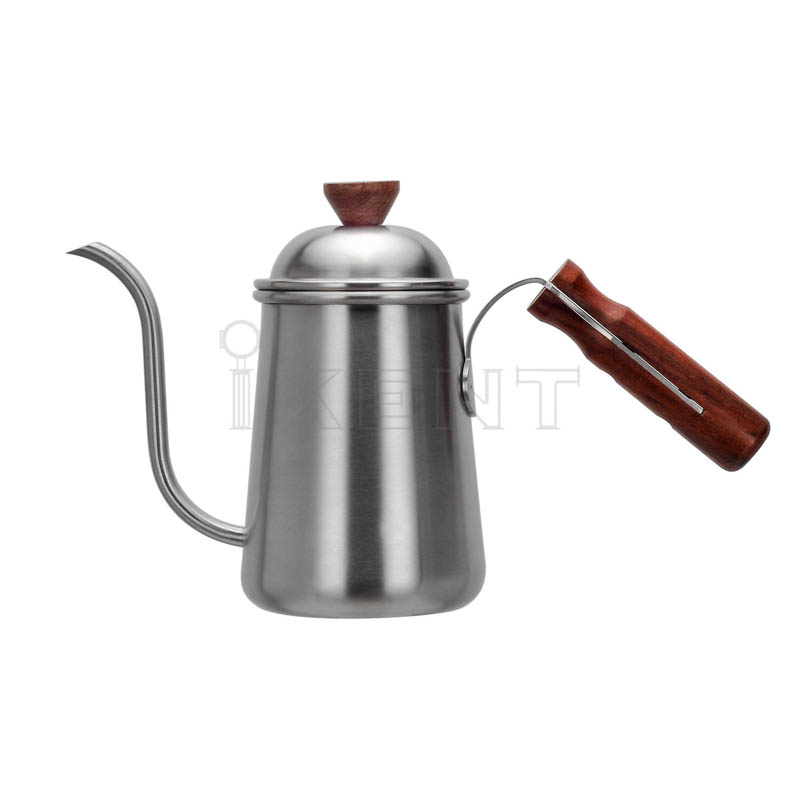
Browse the full Coffee French Press Stainless Steel Double Wall range for sizes, finishes and OEM options.
Let’s Build Something Together
The coffee world keeps demanding quality, functional accessories. Partner with iKentcoffee to offer tools that perform and represent your brand proudly. From manual coffee grinders, espresso tampers and coffee canisters to milk pitchers and full coffee sets — we provide OEM & ODM solutions with low MOQ and stable supply.
👉 Contact us today to discuss wholesale, customization, or to request a sample.
💭 Jiangmen Aika Houseware Co., LTD
💭 Jiangmen Zhenhua Hardware & Plastic Factory
We look forward to the opportunity to collaborate with you!
WhatsApp: +86 13426845305
E-mail: kaelyn@ikentcoffee.com
Website: www.ikentcoffee.com

Leave A Comment