
Ask someone who switched from pre-ground coffee to grinding at home what actually changed, and they rarely mention the grinder. They mention that the same bag tastes completely different three weeks in. Once you only grind what you are about to brew, freshness stops being a word on a label and becomes something you can smell across the kitchen. A hand grinder is the cheapest way to get there – and for a surprising number of people it ends up being the last grinder they buy.

This guide covers what a manual grinder genuinely does better, where it is honestly worse, and what to check before you recommend one to a customer. It is written for the drinker deciding whether to bother, and for the buyer deciding whether manual grinders belong in a range.
Grind consistency decides the cup, not the brewer
Every brewing method extracts at a rate set by particle size. Too many fines and the cup turns bitter and muddy; too many coarse fragments and it runs sour and thin. A blade grinder chops beans into a different mix every time the button is held, which quietly means your brew recipe is drifting from cup to cup even when nothing else changes.
A burr set shears beans between two surfaces held at a fixed gap, so what comes out sits in a narrow band of sizes – and repeats tomorrow. That repeatability is the whole point. If you have ever fixed a bad cup by changing one grind step and nothing else, you have already experienced how much of brewing is decided before water is involved.
A handful of settings covers more methods than you expect
A grinder that only does one grind is only useful if you only ever drink one thing. Most households end up with two or three methods: something fast on a weekday, a pour-over when there is time, a press pot when people come over. Numbered click adjustments let you move between them and, more importantly, move back. Note the setting once and a cup can be repeated months later – which is the difference between fiddling and actually knowing what you like.
For anyone building a small range, this is also why adjustable models sell better than single-purpose ones. A customer who believes the tool will still fit their habits next year is a customer who stops comparing prices.
No cord, no counter space, no 6am noise
The practical underrated part: a hand grinder lives in a drawer. It does not occupy the one power socket near the kettle, it does not need to stay out to be usable, and it can be taken anywhere. People grinding before anyone else is awake, people brewing in a hotel room, and people in small flats with limited counter space form a larger group than most product listings suggest.
It also travels without much risk. Steel-bodied grinders handle being packed in a bag far better than anything with a motor and a power cable, which is part of why they appear so often in gift sets and travel kits.
Why the burr material matters more than the handle
Marketing tends to lead with the handle shape or the wooden finish. What determines whether the grinder is still good in three years is the burr set. Steel burrs hold their cutting edges through daily use and can be wiped or brushed clean; softer materials wear, and a worn burr set quietly drifts back toward – you guessed it – inconsistent particle size.
When comparing models, ask three questions. Is the burr steel rather than a blade? Is the adjustment mechanism metal-on-metal rather than relying on friction between plastic parts? And can the burrs be taken out for cleaning? Those three answers predict longevity better than anything printed on the box. Cleaning is a longer topic on its own – the routines that keep burrs sharp are set out in our guide to cleaning a hand grinder.
Where a hand grinder is honestly worse
Be clear about this with customers, because unmet expectations become returns. Grinding for more than a couple of cups takes real effort, so anyone regularly brewing for a family will eventually want electric. Very light roasts can also take noticeably more force to turn. And there is technique involved: turning too fast generates heat and can make the grind uneven, so a steady rhythm at moderate speed beats an enthusiastic sprint.
Hand grinders also ask the user to do something every morning. Some people come to like that – it becomes the ritual. Others do not, and no amount of build quality will change that.
Matching the grinder to how someone actually drinks
A rough but useful split: someone making a single filter coffee each morning will be genuinely happy with a compact adjustable grinder, and might never upgrade. Someone pulling espresso shots several times a day needs finer, more repeatable steps and will notice a cheap mechanism quickly. Someone who wants the thing to look good on the shelf cares about finish and balance in the hand – which is where different models diverge most, even at similar build quality.
If you are specifying a grinder for retail or private label, this is the decision worth spending time on before ordering: which of those three people is it for? Trying to serve all of them usually produces a product that is too expensive for the first group and too compromised for the second.
Frequently asked questions
Is a hand grinder good enough for espresso?
Yes, provided it has fine enough adjustment steps and a burr set stable enough to hold them. Espresso is unforgiving: a half-step drift changes shot time noticeably. Look for metal adjustment mechanisms and clearly defined clicks rather than smooth unmarked rotation.
How long do steel burrs last?
In home use, years. They are not sharpened or replaced on a schedule; they are kept clean and kept dry. The practical failure modes are corrosion from washing and stored impact damage from being dropped, not wear from beans – beans are far softer than steel.
How much effort is realistic for a daily cup?
Around 15-20 grams of beans takes most people 30 to 60 seconds at a comfortable pace. If that sounds tedious, it is worth being honest before buying: the willingness to turn the handle is part of what you are choosing.
Grinders built around the burr
 CGD008 Manual Coffee Grinder – 5-Axis CNC Stainless Steel Conical Burr
- Manual Coffee Grinder-CGD003
- Manual Coffee Grinder-CGD014
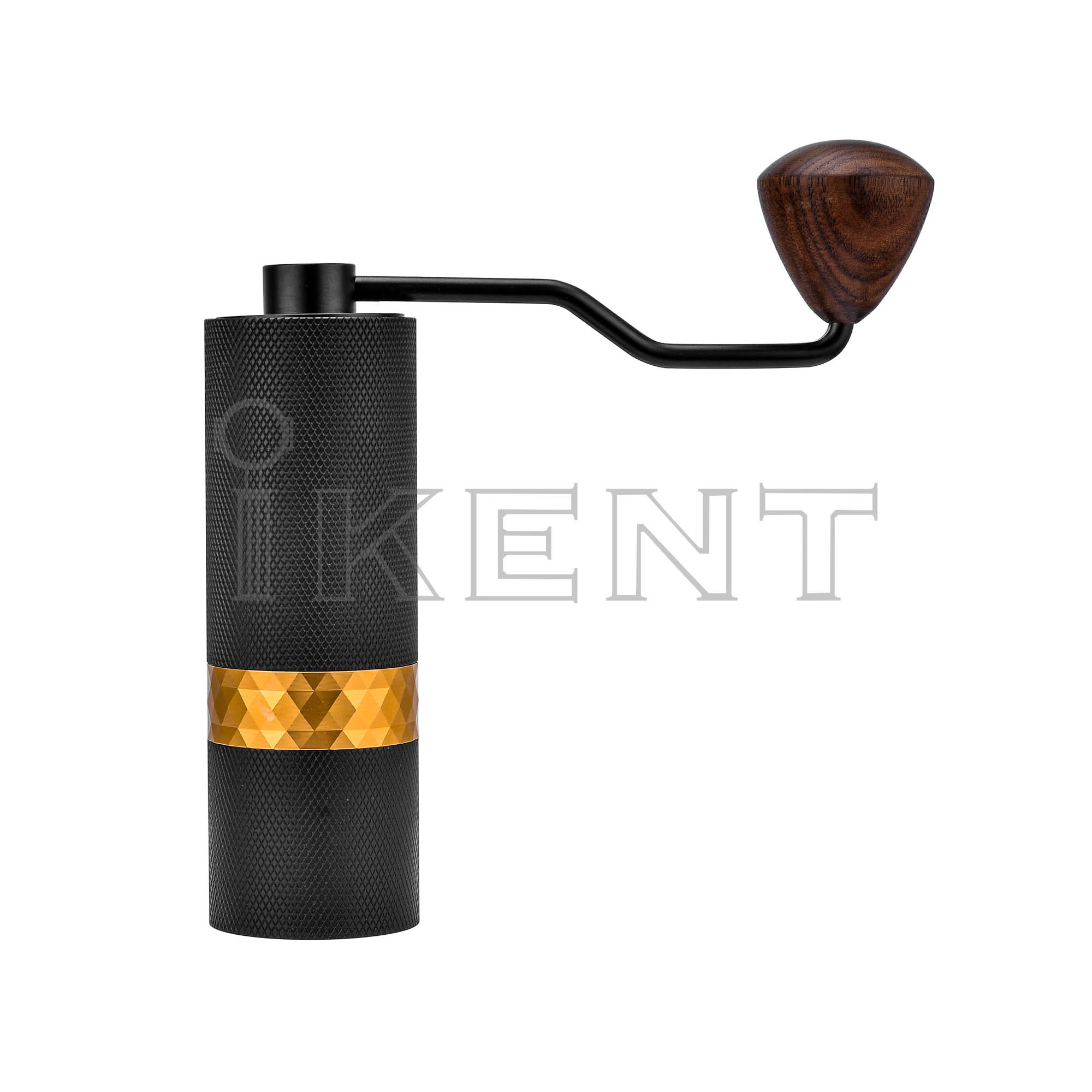
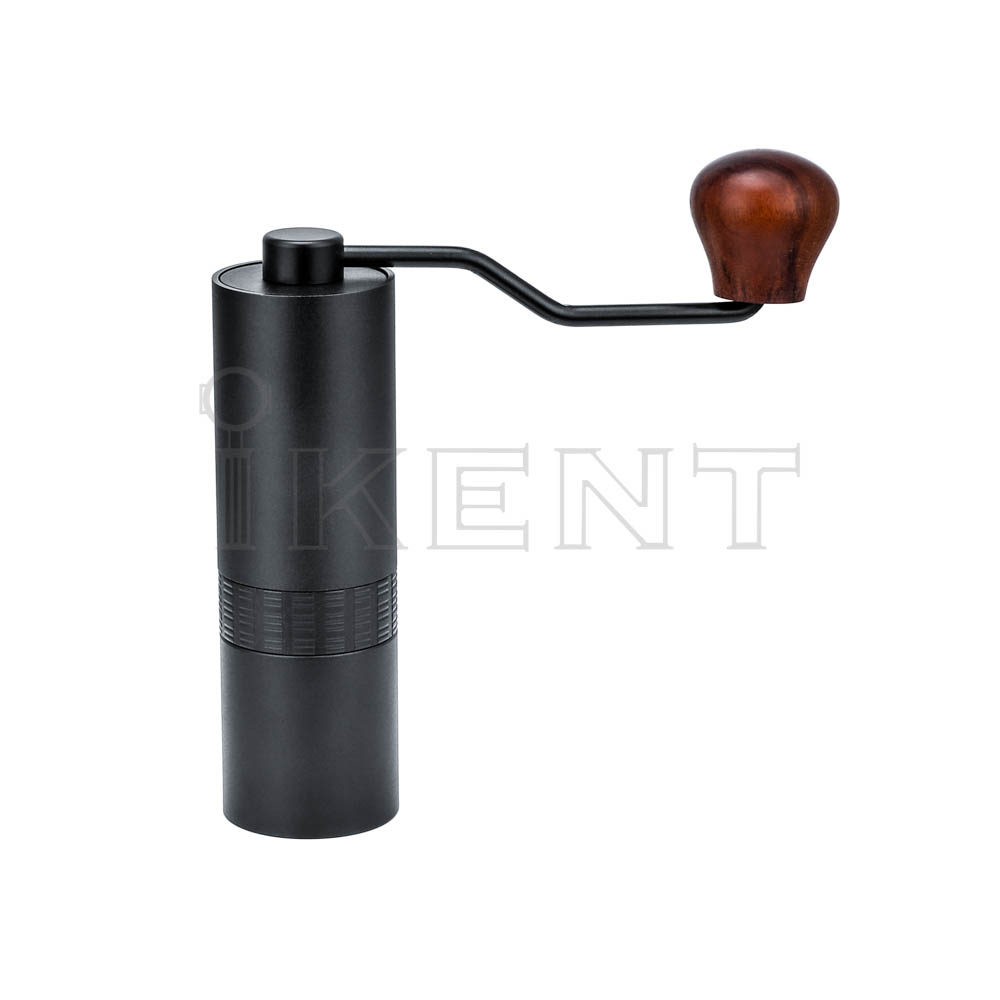

Browse the full Ikentcoffee Manual Hand Coffee Grinder range for sizes, finishes and OEM options.
Let’s Build Something Together
The coffee world keeps demanding quality, functional accessories. Partner with iKentcoffee to offer tools that perform and represent your brand proudly. From manual coffee grinders, espresso tampers and coffee canisters to milk pitchers and full coffee sets — we provide OEM & ODM solutions with low MOQ and stable supply.
👉 Contact us today to discuss wholesale, customization, or to request a sample.
💭 Jiangmen Aika Houseware Co., LTD
💭 Jiangmen Zhenhua Hardware & Plastic Factory
We look forward to the opportunity to collaborate with you!
WhatsApp: +86 13426845305
E-mail: kaelyn@ikentcoffee.com
Website: www.ikentcoffee.com
Leave A Comment