
Coffee does not go off in the way milk does. It does not spoil, it does not smell wrong, and nothing about opening a three-month-old bag suggests anything is bad. That is precisely why freshness is hard to sell and easy to lose: the coffee quietly gets worse in a way that is impossible to detect until you compare it side by side.

The whole-bean-or-ground question is not really about convenience versus quality. It is about how quickly ground coffee loses what you paid for, and whether grinding at home is practical enough to be worth it.
What actually leaves the coffee
Freshly roasted beans contain a substantial volume of trapped carbon dioxide and a large set of volatile aromatic compounds. Both start escaping the moment roasting ends, and both leave far faster once the bean is broken.
A whole bean has a huge amount of intact cellular structure protecting those compounds. Grinding exposes an enormous new surface area to air in a single step – think of how much more aroma you smell in the kitchen immediately after grinding. That smell is the product leaving.
In practical terms the difference is stark: whole beans stay pleasant for weeks if stored well. Ground coffee is noticeably flatter within days, and mostly aromatically spent within about two weeks of grinding. The ground coffee sold in a supermarket has usually been ground considerably longer ago than that.
Why packaging only delays it
Sealed bags with valves are genuinely good technology – the valve lets CO2 out without letting oxygen in, which is why sealed packs do not burst. But nothing in packaging restores anything. Whatever aroma was already lost during grinding and transport is simply gone, and the clock on what remains started the day it was ground.
This is also why “sealed” should not be read as “fresh”. Industrially packed ground coffee is protected from going rancid, not preserved at its peak.
The counter-argument: convenience is real
It would be dishonest to pretend otherwise. Pre-ground removes a device, a step and roughly thirty seconds from every morning. For some households, that trade is correct and no amount of freshness argument changes the arithmetic – a cup that does not get made has zero quality.
The genuine middle ground exists too: buy whole beans, have them ground at purchase in a quantity that will be consumed within ten days, or grind several days’ worth at home and store it airtight. Either approach captures most of the benefit with little friction.
Making freshness practical
The reason people stay with pre-ground is usually not laziness but equipment friction – noisy electric grinders that need counter space and cleaning afterwards. A compact hand grinder removes nearly all of it: it lives in a drawer, works without power, takes half a minute for a single dose, and needs only occasional brushing. The reasoning is set out in our notes on grinding by hand.
Storage is the other half. Whatever form it comes in, coffee degrades fastest with oxygen, light, heat and moisture – which is why an airtight, opaque container away from the oven does more for flavour than most brewing upgrades. Our guide to a canister worth keeping out covers what actually matters there, and it is not the things most listings emphasise.
When pre-ground is genuinely fine
Be specific rather than dogmatic. Pre-ground suits: people who brew rarely enough that a bag lasts months whatever form it comes in; situations where brewing happens away from any grinder, such as an office or a holiday rental; and any method that is insensitive to fine adjustments – drip machines and immersion brews tolerate a uniform, slightly stale grind more gracefully than espresso does.
Espresso is the exception that proves the rule. It is the most sensitive method to both grind size and freshness, because extraction happens in roughly 25 seconds under pressure. Stale coffee cannot hold the crema, and pre-ground almost never suits a specific machine.
How to tell if it matters to you
Run the cheap experiment. Buy the same coffee twice – one bag whole bean, one ground at the shop – brew both the same way within ten minutes, and taste them side by side. Most people detect the difference immediately, particularly in aroma before the first sip. If you cannot tell, buy whichever is easier and stop worrying about it – that is a genuine result, not a failure.
Frequently asked questions
How long does ground coffee actually stay good?
Noticeably flatter within days of grinding and largely past its best within around two weeks. Whole beans stored airtight away from light typically stay pleasant for several weeks – sometimes longer, depending on roast.
Can I grind several days at once?
Yes, if it is stored airtight away from light. It is a sensible compromise: losing a little aroma across a week is far better than buying something ground six weeks earlier.
Is pre-ground always worse?
Not “worse” so much as older. If you use it up within ten days of grinding and brew with a forgiving method, the difference is small. Much of the reputation comes from bags that were ground long before they reached the shelf.
Grind fresh, then store it
 CGD008 Manual Coffee Grinder – 5-Axis CNC Stainless Steel Conical Burr
- Manual Coffee Grinder-CGD005B
- Coffee Bean Canister-CA001WW
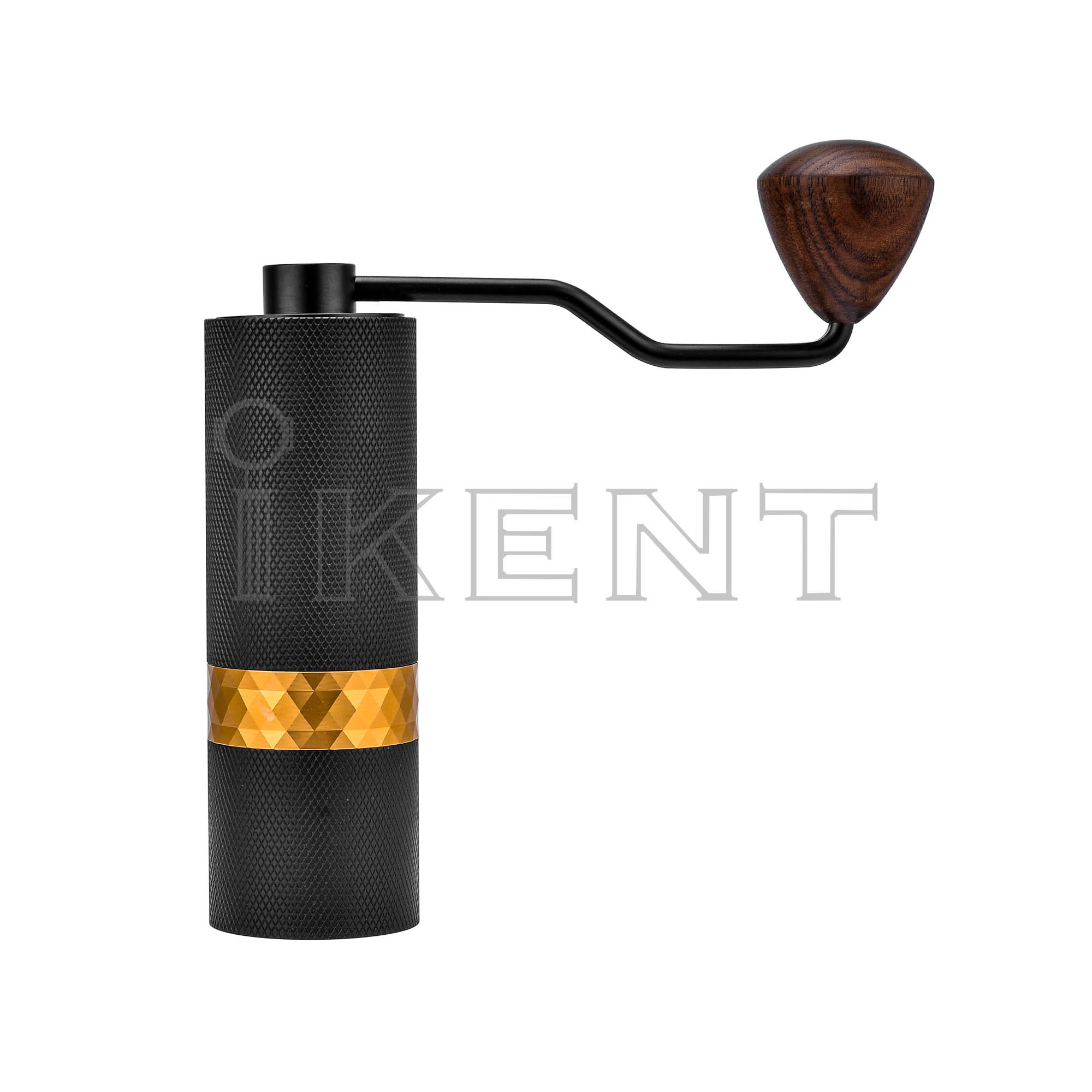


Browse the full Ikentcoffee Manual Hand Coffee Grinder range for sizes, finishes and OEM options.
Let’s Build Something Together
The coffee world keeps demanding quality, functional accessories. Partner with iKentcoffee to offer tools that perform and represent your brand proudly. From manual coffee grinders, espresso tampers and coffee canisters to milk pitchers and full coffee sets — we provide OEM & ODM solutions with low MOQ and stable supply.
👉 Contact us today to discuss wholesale, customization, or to request a sample.
💭 Jiangmen Aika Houseware Co., LTD
💭 Jiangmen Zhenhua Hardware & Plastic Factory
We look forward to the opportunity to collaborate with you!
WhatsApp: +86 13426845305
E-mail: kaelyn@ikentcoffee.com
Website: www.ikentcoffee.com

Leave A Comment