
Cupping – the standardised way professionals taste coffee side by side – has a reputation for ceremony. The matching bowls, the spoons, the slurping, the scoring sheets. Strip all of it away and what remains is a genuinely useful method for answering ordinary questions: which of these two bags do I prefer, and why?

You do not need a lab. You need consistency, and you need to change one thing at a time.
The rule that makes everything else work
A comparison only tells you something if all variables except one are identical. Different grind sizes, different water temperatures, different ratios between the two cups and you have learned nothing except that the second one tasted different – which you already knew.
That means the same grinder setting, the same water, the same dose, the same vessel size, and ideally the same resting times. This single principle is more valuable than any other piece of kit in this article.
A practical setup for two or three coffees
Three identical bowls per coffee is ideal, because a single cup can be unrepresentative – one odd extraction skews everything. If three bowls per sample is impractical, two is acceptable; one is a guess.
Ratio. Around 1:18 works well for cupping – roughly 8-10 g of coffee to 150-180 ml per bowl. Keep it identical across every sample.
Grind. Medium-coarse, slightly coarser than a standard filter grind, and – critically – ground fresh and consistently. Grinding all samples just before pouring follows naturally from why whole bean keeps better than pre-ground.
Water. Clean, odour-free and near boiling – roughly 93-96 C. If tap water tastes of anything, it will taste of that in the cup and confound every conclusion.
The sequence
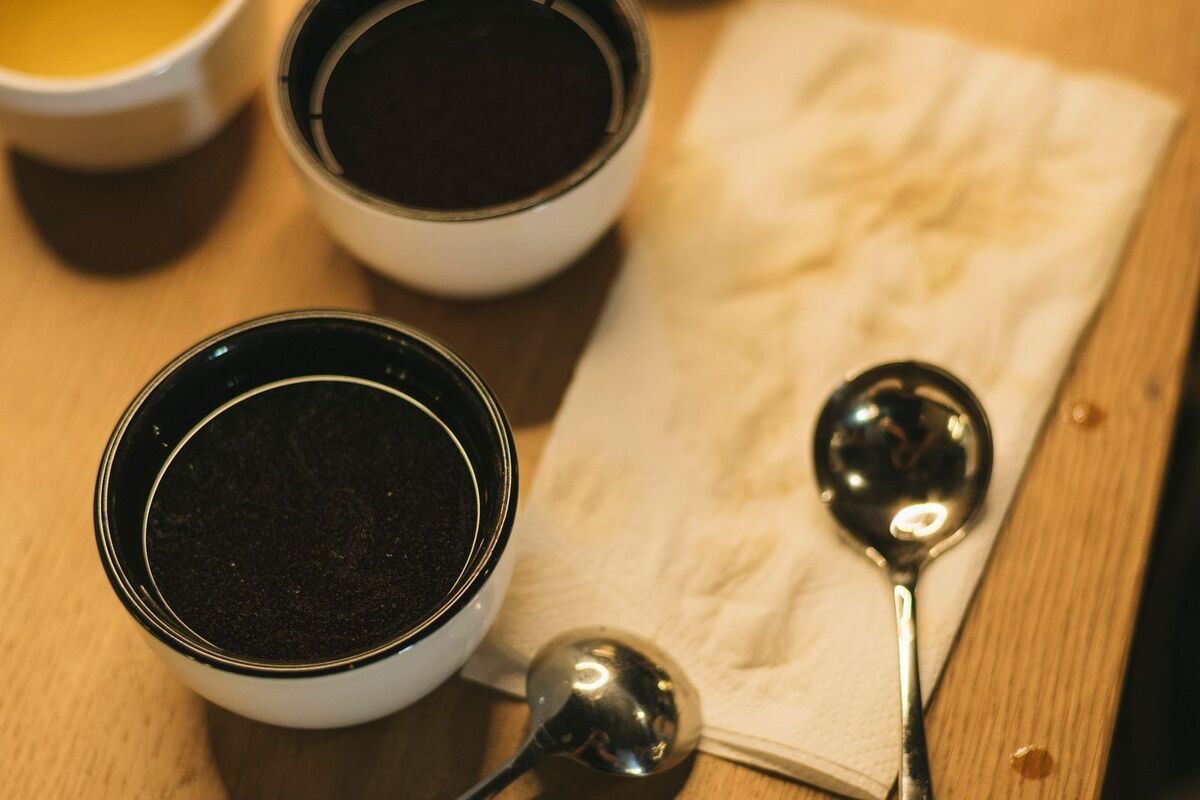
Grind each sample, then smell the dry grounds before adding water. This is the “fragrance” stage and it often reveals roast defects and origin character more clearly than the brewed cup – trust the differences you notice here.
Pour water over each in turn, filling completely, then leave them alone for four minutes. A crust of grounds and foam forms on top; this is expected.
At around four minutes, break the crust: take a spoon, push gently across the surface once or twice, and smell immediately. This is the most aromatic moment of the whole process and where differences are easiest to distinguish. Then skim the floating foam and grounds off the top so they do not end up in the spoon.
Tasting properly
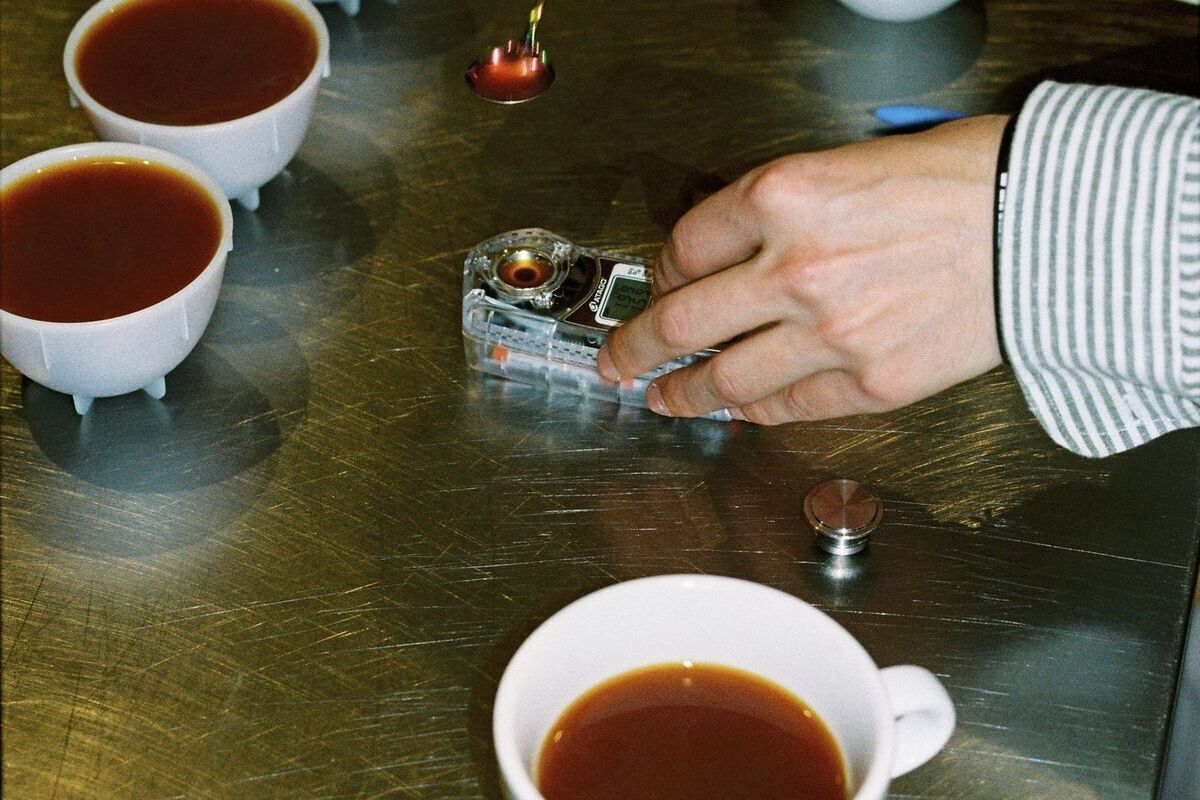
Let it cool slightly, then taste – and do actually slurp. Spraying coffee across the tongue rather than sipping is what delivers it quickly and aerated across the whole palate; it is louder and less elegant, but the reason it is standard is that it works.
Score or note while hot, then taste again as it cools. Many coffees change considerably: sweetness often emerges in the mid-range, acidity becomes clearer, and defects – astringency, a cardboard flatness – frequently reveal themselves only once the cup has cooled. Anyone judging a coffee on one hot sip is missing half the picture.
What to actually pay attention to
Rather than trying to score like a judge on the first attempt, use four plain questions:
Acidity. Not sourness – brightness. Does it feel lively, or dull? Is it citrus-ish, berry-like, malic?
Body. The physical weight and texture. Thin and tea-like, or syrupy and coating?
Sweetness. The attribute most often missing from average coffee. Even without sugar, good coffee reads as sweet.
Finish. How long the impression lasts, and what it turns into. A short, abrupt finish is not necessarily bad, but a pleasant, lingering one marks good beans.
Equipment worth caring about – and not
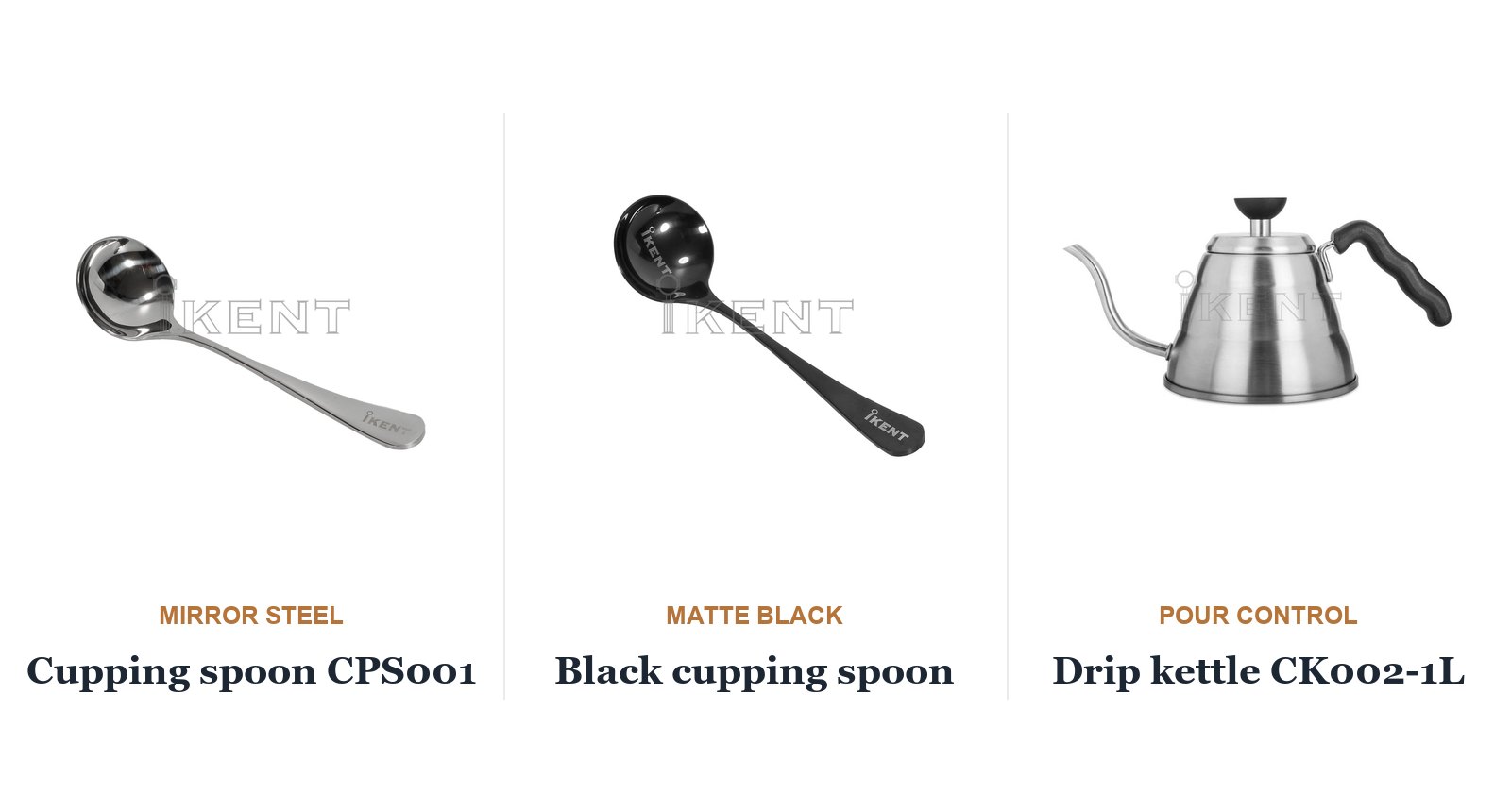
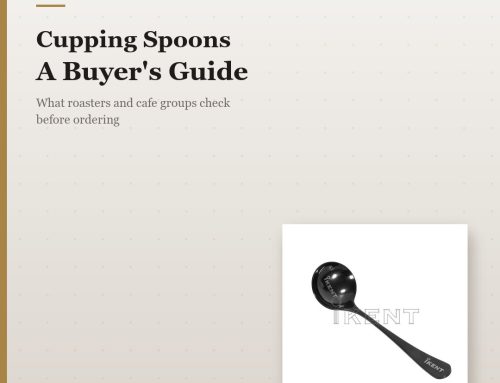
Spoons matter more than people expect, because a spoon that is not rinsed perfectly between samples contaminates the next one. Stainless bowls rinse clean and do not hold flavour from the previous coffee; porous or coated alternatives do. That single property makes stainless cupping spoons the standard for a reason.
Everything else is secondary. Identical cups are useful because identical volume matters, and a kettle with reasonable control makes hitting the same water temperature every time less of an effort. Nothing beyond that is required to compare two bags meaningfully.
Frequently asked questions
How many coffees can you cup at once?
Three comfortably for one person; up to five if you are disciplined about writing notes immediately. Beyond that palate fatigue sets in and later samples get judged unfairly.
Do I need special cupping bowls?
No. Identical mugs or small bowls work. What matters is equal volume, consistent ratio and the ability to smell before tasting – so a wide opening helps.
Why does everything taste the same after a while?
Palate fatigue, usually after four or five samples. Rinse with plain water between samples, take a break, and taste again in ten minutes rather than pushing through.
A simple cupping table


Browse the full Coffee Accessories range for sizes, finishes and OEM options.
Let’s Build Something Together
The coffee world keeps demanding quality, functional accessories. Partner with iKentcoffee to offer tools that perform and represent your brand proudly. From manual coffee grinders, espresso tampers and coffee canisters to milk pitchers and full coffee sets — we provide OEM & ODM solutions with low MOQ and stable supply.
👉 Contact us today to discuss wholesale, customization, or to request a sample.
💭 Jiangmen Aika Houseware Co., LTD
💭 Jiangmen Zhenhua Hardware & Plastic Factory
We look forward to the opportunity to collaborate with you!
WhatsApp: +86 13426845305
E-mail: kaelyn@ikentcoffee.com
Website: www.ikentcoffee.com

Leave A Comment