
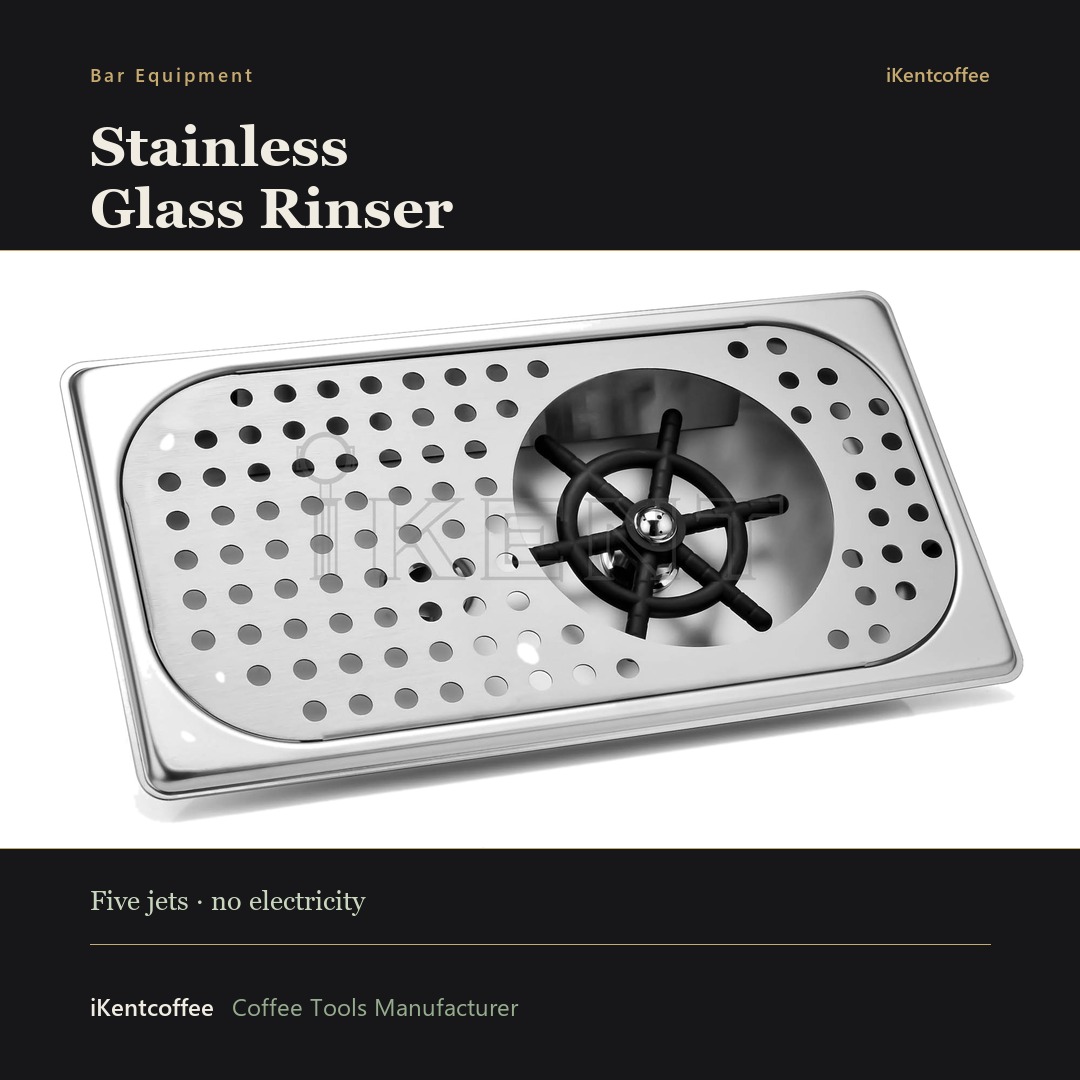
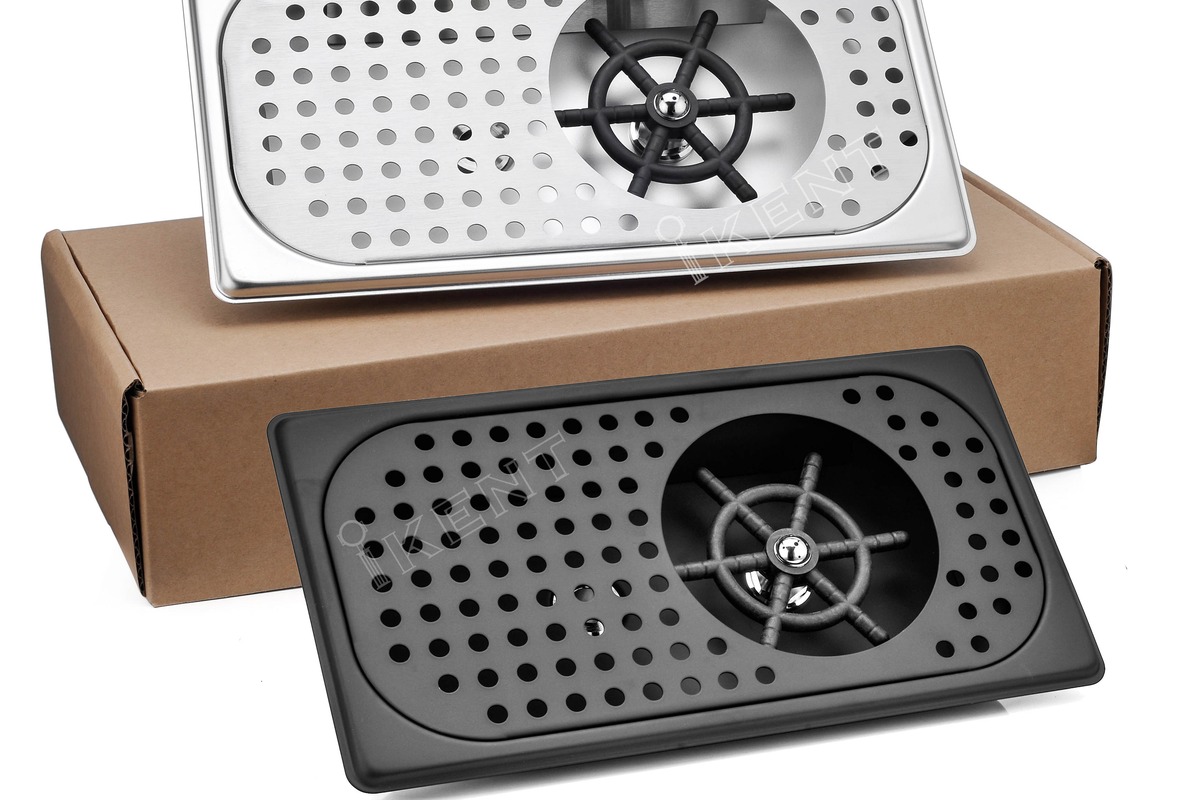
A glass rinser is a flat stainless tray set into the bar counter with a spring-loaded star rest and a central nozzle at the bottom of the well: press a cup down onto the star and water sprays up inside it, lift the cup and the spray stops. It runs on mains water pressure alone – no motor, no wiring, nothing to plug in. The RN007 from iKent is a 304 stainless steel unit measuring 325 × 175 × 30 mm, with a copper and nylon nozzle, five spray holes, and a 50,000-cycle pressure test on every unit before it is packed.
What does a glass rinser actually do?
It does not wash a cup – it clears one. The job is the ten seconds between drinks: the milk jug that just steamed, the espresso cup going back under the group, the tasting glass that held a natural and is about to hold a washed. A rinse removes the film that would otherwise carry flavour into the next drink, and it does it at the bar instead of at a sink.
That distinction matters more in coffee than in a bar. Milk fat is the stubborn one: a jug rinsed only at the end of a shift holds a residue that knocks the next foam down, and a demitasse left with old crema tastes bitter before the shot has even settled. The rinser makes the correct behaviour the easy one – the cup is already in your hand, so it takes a press rather than a walk.
The tray also catches what a sink cannot. The perforated surface drains straight into the pan below, so spoons, portafilter baskets and small parts can sit on it between uses without pooling water on the counter.
How does it work without electricity?
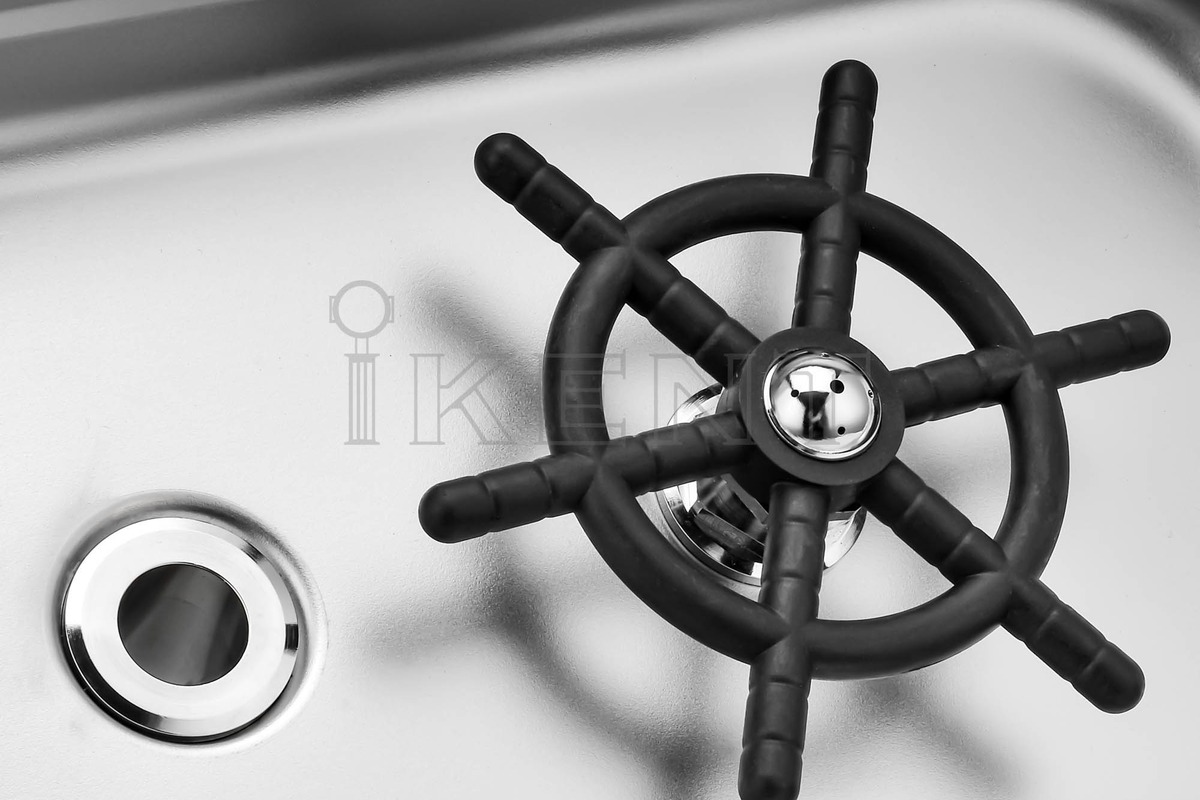
The mechanics are entirely mechanical. A star-shaped rest sits in the well over a spring-loaded valve. Setting a cup down on the star pushes the valve open and the water goes up through the nozzle into the cup; lifting the cup lets the spring close it again. Because the trigger is the cup itself, nothing runs when the bar is idle and nobody has to remember to turn anything off.
The nozzle is the part that decides whether the rinse actually works. On the RN007 it is a five-hole high-pressure spray built from copper and nylon, set low in the well so the jets fan out across the inside wall of the cup rather than firing straight up the middle. A single central jet rinses the bottom and leaves the sides untouched; a spread pattern is what lifts residue off the wall.
Every unit is pressure-tested through 50,000 cycles before it is packed. That is the number to ask any supplier for, because the failure mode on a rinser is not cosmetic – a valve that stops seating leaks continuously into the pan, and the symptom is a bar that smells of old milk.
Which cups can it take?
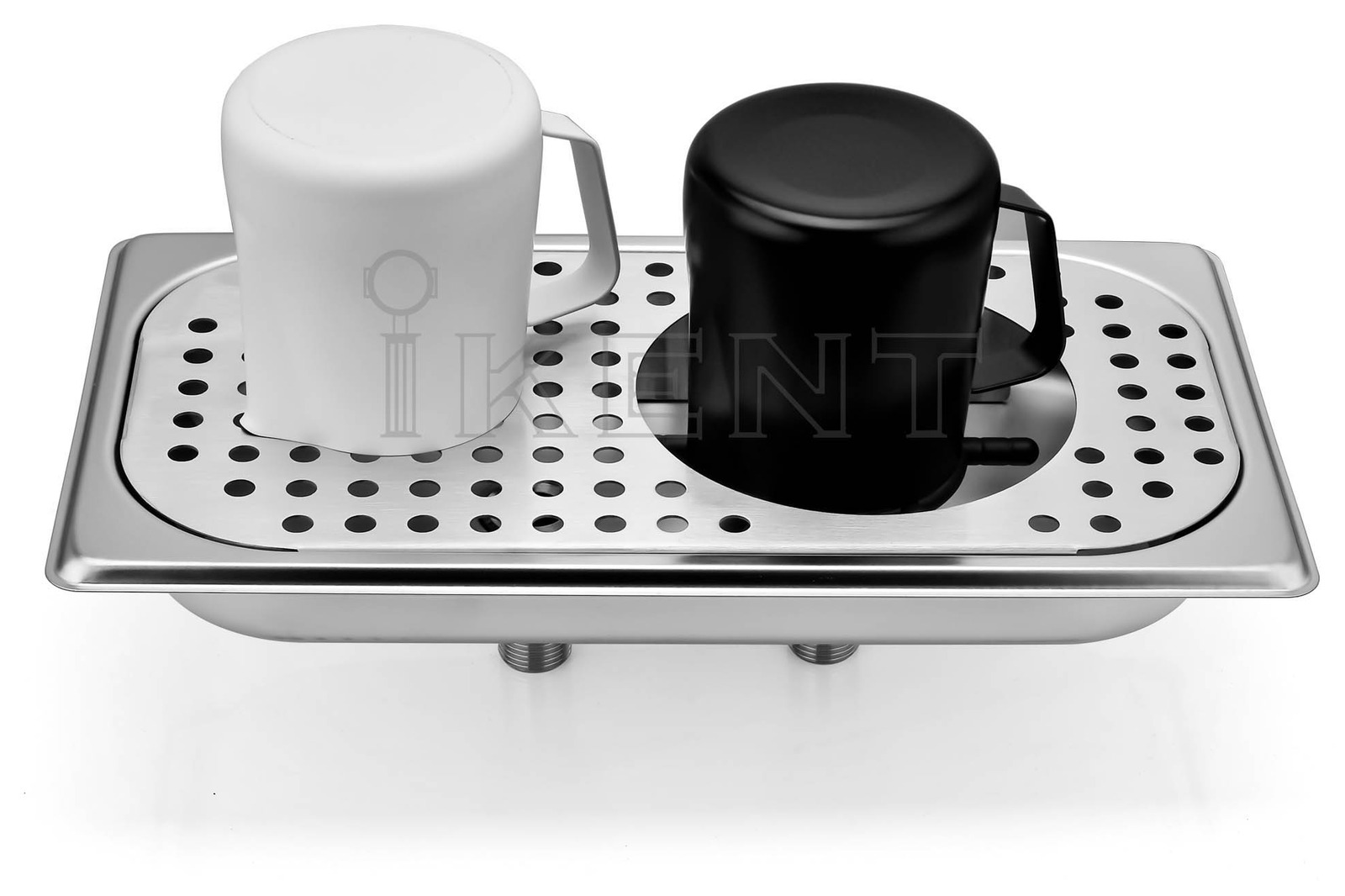
The short answer is anything with a mouth wide enough to sit over the star and a body that fits inside the well. In practice that covers the whole working set of a coffee bar or a cocktail bar: red wine glasses, beer glasses, coffee mugs, milk jugs, tumbler and latte glasses, and tea cups. The tray is 325 × 175 mm, wide enough for two cups side by side, so one unit serves a two-person bar during a rush.
Two shape notes are worth knowing before you specify one. Stemmed glasses are rinsed mouth-down over the star, which works because the jets are angled outward rather than straight up. Tall, narrow glasses sit deeper in the well than wide mugs, so the spray reaches the top of a tall glass easily and a shallow cup gets the same volume concentrated lower down – both rinse, but the tall glass is the better match for a five-hole pattern.
Where does it earn its place in a coffee bar?
Put it where the dirty cups already are. On an espresso bar that means the milk station, not the dish pit: the jugs and the demitasse come back to the same square metre of counter all day, and that is the square metre worth spending on. A rinser next to the grinder also gives the barista a place to park a dosing cup or a basket between shots without setting it down wet.
The second place it earns its keep is the pass, or any counter where drinks are handed over. Glasses come back from the floor, get a rinse and go out again, which is faster than a tray run to the sink and keeps the glassware count down on a busy service.
What it will not do is replace a glasswasher. A rinse removes residue, not grease or lipstick marks at the rim, and it does nothing about sanitising. Treat it as a between-drinks tool and the glasswasher as the end-of-service one – bars that try to swap one for the other end up with cloudy glassware by the second week.
What should you check before ordering?
Four things decide whether a rinser survives a real bar: what the body is made of, what the nozzle is made of, how the valve was tested, and whether the tray is one pressing or a welded assembly. The table below is the full specification of the RN007. If you are drawing up a whole bar list rather than one item, the wider range is mapped in the coffee tools catalogue.
| Item | Value |
|---|---|
| Model | RN007S (silver) / RN007B (black) |
| Body material | 304 stainless steel |
| Nozzle | Copper and nylon, five-hole high-pressure spray |
| Overall size | 325 × 175 × 30 mm |
| Pressure test | 50,000 cycles per unit before packing |
| Operation | Automatic, electricity-free – press the cup to spray |
| Finish | Mirror / matt / frosting / painting |
| Colour | Black / silver / custom |
| Logo | Custom, laser marking or silkscreen |
| Packaging | White box, gift box, carton |
| Testing | Conforms to FDA (21 CFR) and LFGB food-contact requirements |
Why 304 and not a cheaper grade?
A rinser is wet all day and in contact with drinks, so the steel has to do two jobs at once: resist corrosion at the welds and stay safe against food. 304 covers both, which is why it is the grade specified for the body here rather than the 200-series alloys used on parts that stay dry. On a piece that sits in water, the price difference per unit is small next to the cost of a rust bloom appearing around the drain in month three. The same material logic runs through the rest of the range, as we set out in 304 stainless steel coffee tools.
Finish matters for the same reason. Mirror polishing is the showroom option and reads well next to a polished portafilter, but it shows every water spot. Matt and frosting hide the marks and are the practical choice for a bar that is wiped down ten times a shift. Painting adds a colour layer, which is what a black unit is: the panel is finished black, not bare steel.
Two parts, so it can be cleaned
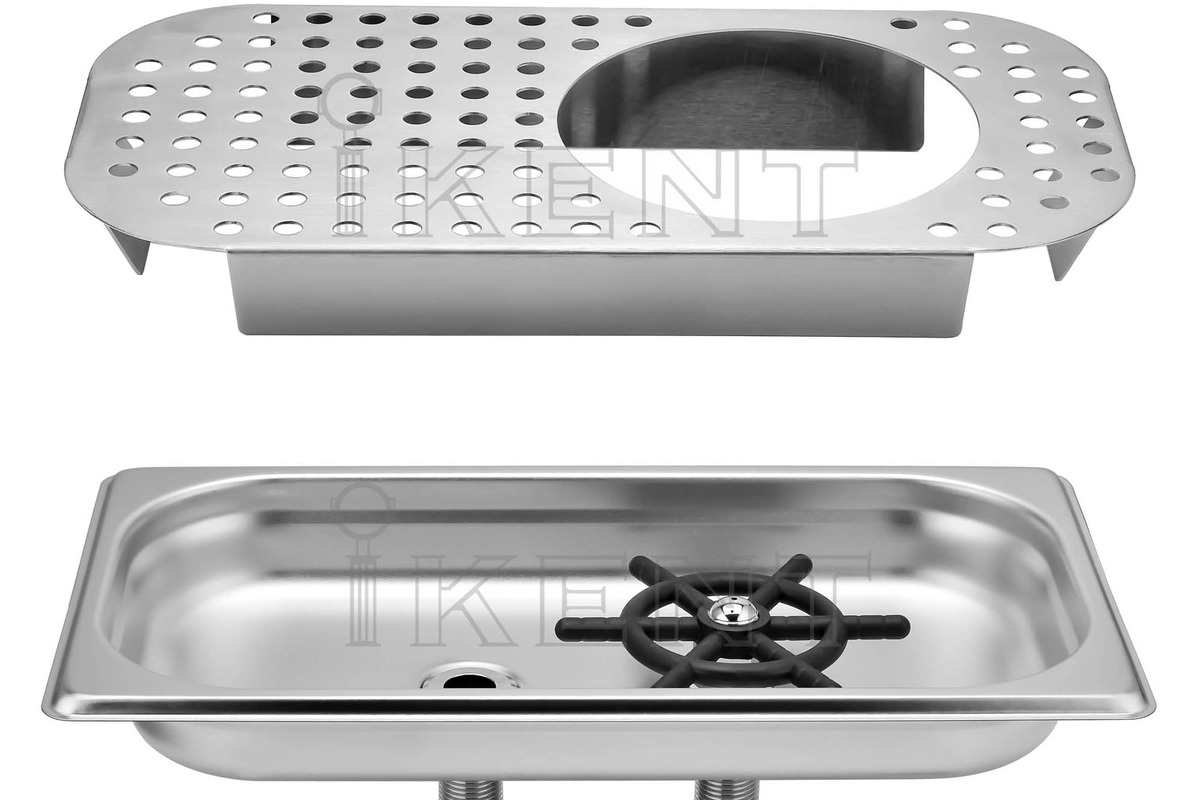
The tray lifts out of the pan, which is the detail that decides how the unit ages. Residue collects in the well and around the star rest, and a one-piece body can only be flushed from above. A tray that comes out can be soaked, and the drain holes can be cleared with a brush instead of a wire.
Underneath, the pan carries two threaded inlets so the water feed can be routed from either end depending on how the counter is laid out. The tray is a drop-in: the flanged rim sits on the counter over a cut-out, and the pan hangs below in the cabinet space.
Ordering it for your own brand
The RN007 is made in our own plants in Jiangmen – one forms and polishes 304 stainless steel, the other machines handles, springs and burrs – so a colour or a wall-thickness change goes to the bench rather than through a trading company. Colours are matched to any Pantone, the logo goes on by laser or silkscreen, and packaging runs from a white box to a printed gift box and an export carton. The finish and logo options are the same ones described in our coffee tools branding guide.
Custom sizes and packaging are available for OEM orders, and units can ship straight to Amazon FBA with FNSKU labelling and carton marking handled. Minimums are quoted per project rather than fixed in a catalogue: they depend on the part, the finish and the packaging, so tell us the target quantity and the spec and we come back with what is realistic on that tooling.
Frequently asked questions
Does a glass rinser need plumbing?
It needs a cold water feed and a drain, both under the counter. There is no pump and no electricity: the unit uses the pressure already in the line, and the water that comes off the cup falls into the pan and out through the drain. That is why it can be fitted to an existing bar without an electrician.
Will it fit a standard counter cut-out?
The tray is a drop-in with a flanged rim, so the opening is cut to the tray footprint and the pan sits below. The overall size is 325 × 175 × 30 mm. Check the space under the counter before you cut – the pan plus the two inlet fittings is what needs the clearance, not the tray.
Can it rinse a tall latte glass or a pint glass?
Yes. The star rest holds the glass mouth-down over the jets, so height is limited by the glass, not by the tray. Five angled jets reach the wall of a tall glass; a shallow cup simply gets the same pattern concentrated near the base.
Do you make a black version?
Yes – RN007B is the black unit, RN007S the silver one. Both are 304 stainless steel with the same nozzle and the same 50,000-cycle test; the difference is the finish, and any Pantone colour can be matched on a custom run.
Can we put our logo on it and ship to Amazon?
Yes. Logo goes on by laser marking or silkscreen, packaging runs from a white box to a printed gift box, and orders can ship straight to FBA with FNSKU labelling and carton marking. Send the artwork and we return a proof before production.
Is it food-safe?
The body conforms to FDA (21 CFR) and LFGB food-contact requirements, and a third-party test report is available for the tested SKU. Reports are issued per SKU, not as a blanket claim across a range, so ask for the one that matches the finish you are ordering.
Bar tools that sit next to the rinser
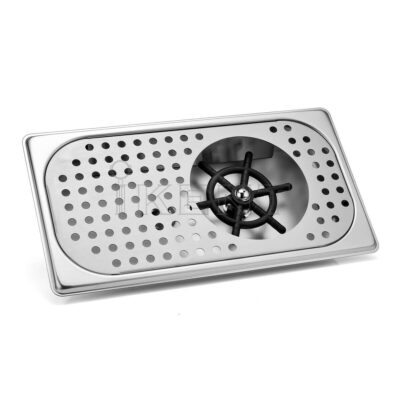

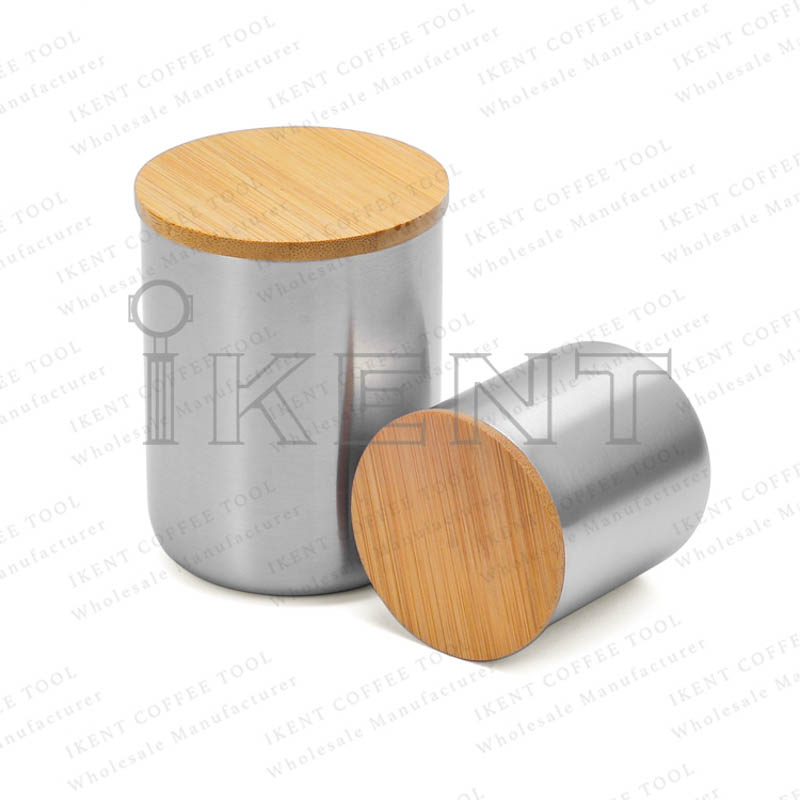
Browse the full iKent Coffee Products range for sizes, finishes and OEM options.
Let’s Build Something Together
The coffee world keeps demanding quality, functional accessories. Partner with iKentcoffee to offer tools that perform and represent your brand proudly. From manual coffee grinders, espresso tampers and coffee canisters to milk pitchers and full coffee sets — we provide OEM & ODM solutions with low MOQ and stable supply.
👉 Contact us today to discuss wholesale, customization, or to request a sample.
💭 Jiangmen Aika Houseware Co., LTD
💭 Jiangmen Zhenhua Hardware & Plastic Factory
We look forward to the opportunity to collaborate with you!
WhatsApp: +86 13426845305
E-mail: kaelyn@ikentcoffee.com
Website: www.ikentcoffee.com

Leave A Comment