
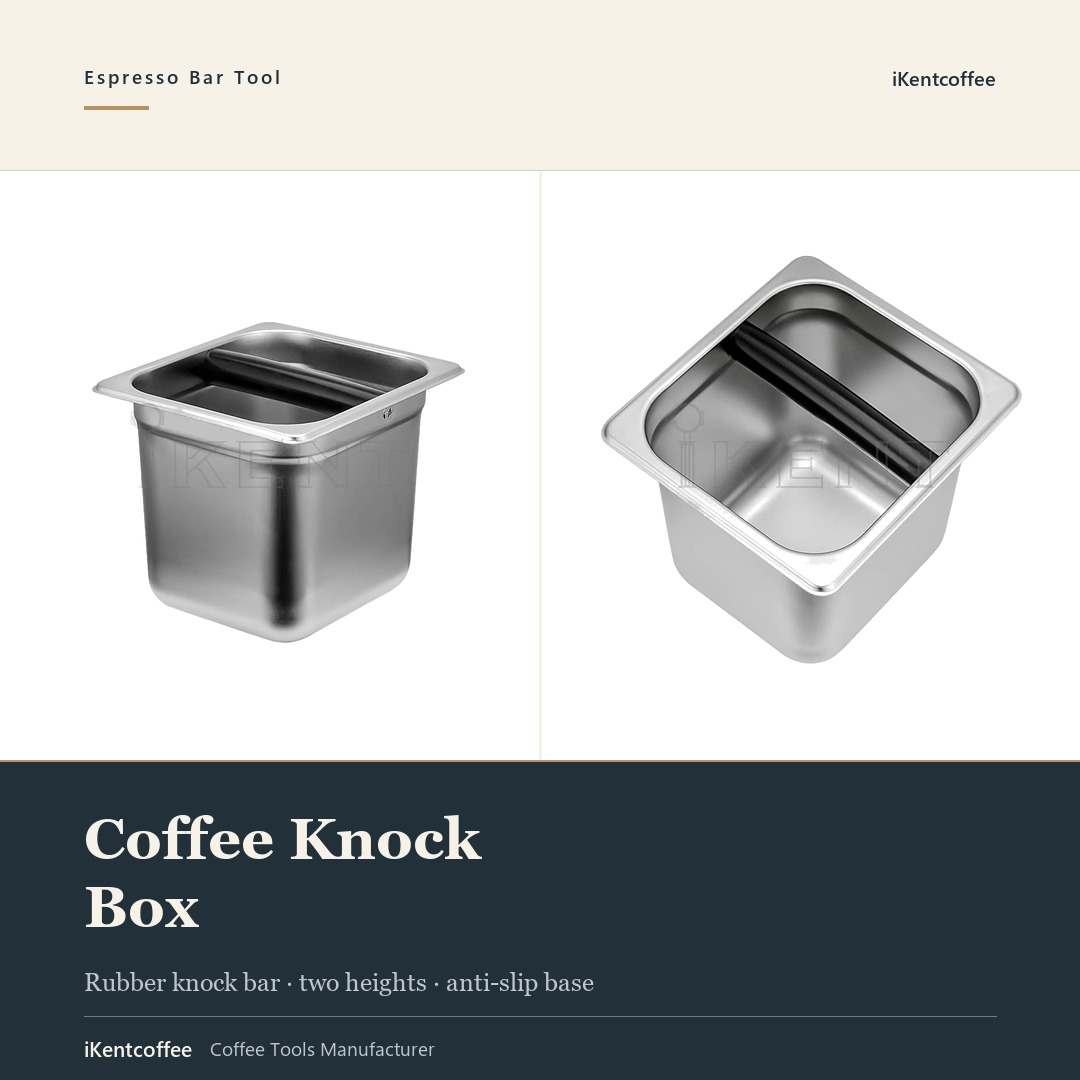
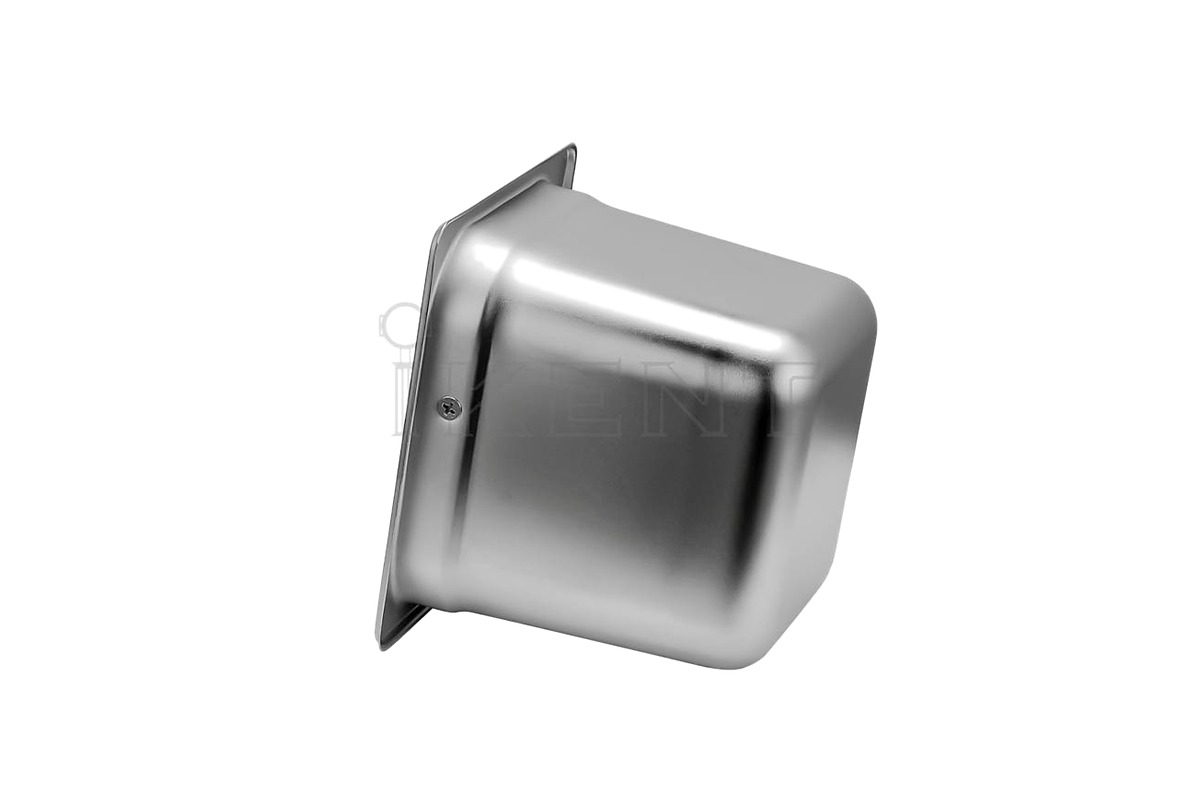
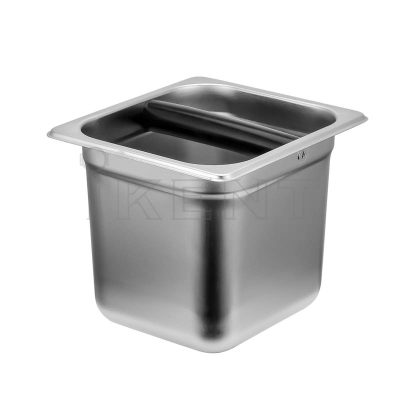
A coffee knock box is the open stainless bin that sits beside the espresso machine: you tap the portafilter against a rubber bar across the mouth, the spent puck drops in, and the basket is clear for the next shot. There are no moving parts and no power. The CKB006S from iKent is a 304 stainless steel box with a rubber or silicone knock bar, supplied in 176 × 165 × 100 mm or 176 × 165 × 150 mm, with an anti-slip base and a body that comes apart for cleaning.
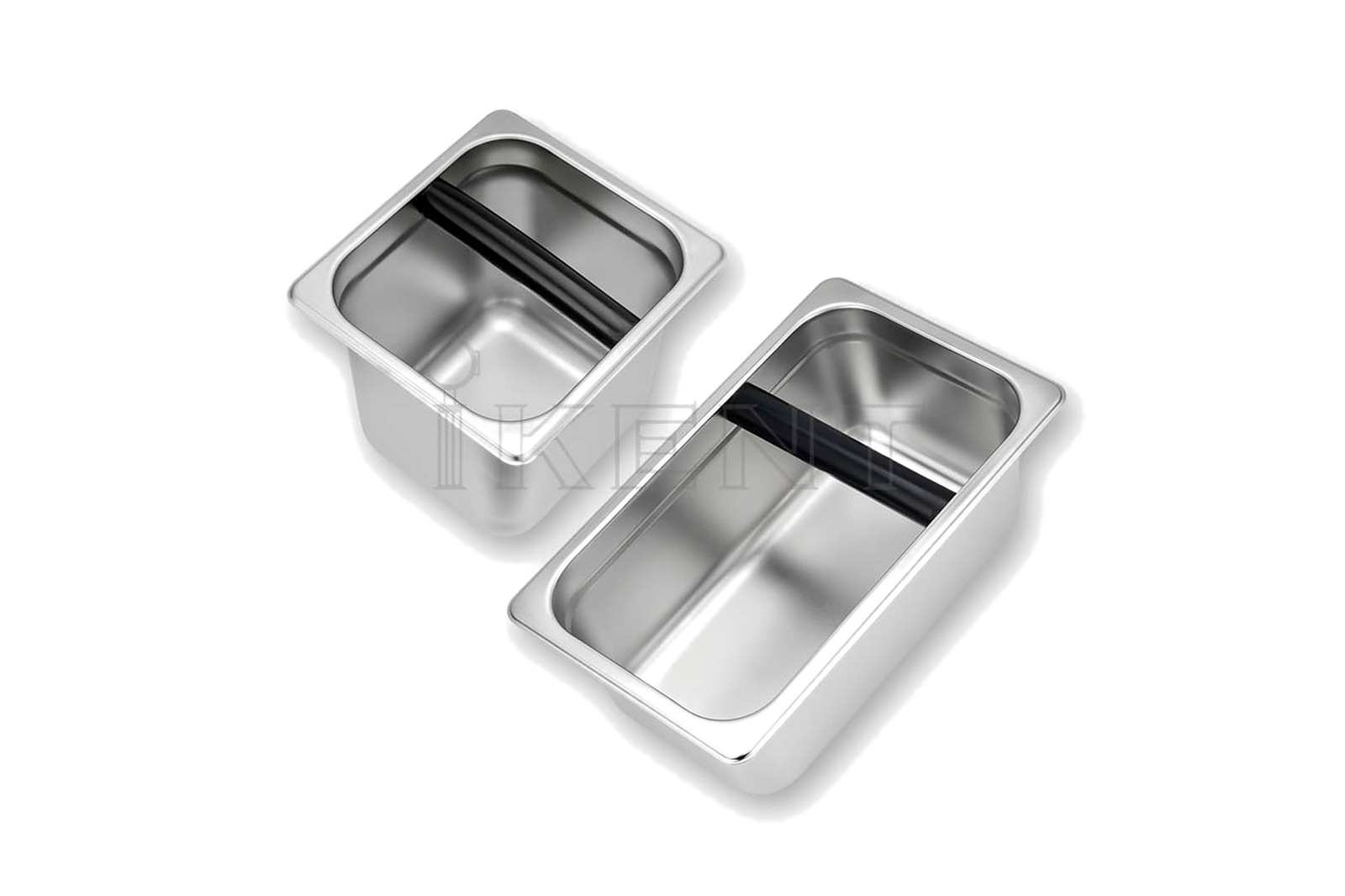
What does a coffee knock box actually do?
What separates a good one from a bad one is not the bin itself: it is where the bin sits, what the bar is made of, and how quickly it can be emptied during a rush. It is not a waste bin that happens to sit near the machine. It is the endpoint of the most repeated motion in espresso service. Knock the puck, wipe the basket, dose, tamp, lock in, pull. On a busy bar that loop runs several hundred times a shift, and every repetition ends at the same square of counter. The knock box is what makes the loop short enough to hold a queue.
The other job is containment. A spent puck is wet, warm and slightly acidic. Left in an open tray near the group head it starts to smell within a few hours, and the smell travels across the pass where customers are standing. A lidded domestic bin is worse: it traps the moisture and grows mould. A proper knock box is open enough to be emptied often, deep enough that the puck does not bounce out, and smooth enough that yesterday’s grounds do not cake into the corners.
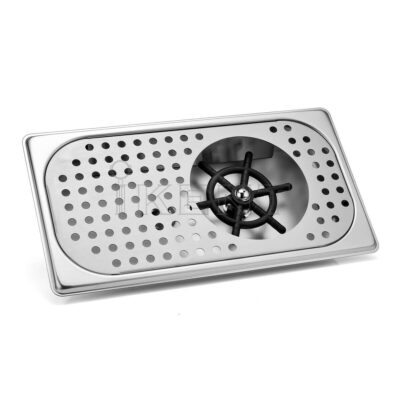
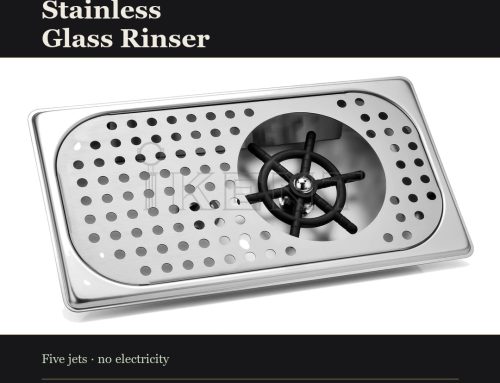
It also divides the cleaning work with the rest of the bar. A bar sink rinser deals with cups and milk jugs between drinks; the knock box deals with the portafilter. Bars that try to make one station do both end up walking wet tools across the counter.
Why is the knock bar rubber rather than steel?
Because the bar takes the impact, not the bin. A bare steel bar sends the shock straight back up into the portafilter, which over time marks the lugs and chips the finish on a plated handle. It is also loud: a metal-on-metal tap every fifteen seconds is the noise that baristas notice at the end of a long shift. A rubber or silicone bar absorbs the strike, keeps the noise down and gives the puck something to break against rather than bounce off.
The CKB006S is specified as 304 stainless steel with silicone or rubber components, and the bar is a separate part that lifts out. That second detail matters more than it sounds. Grounds pack into the gap between a bar and the wall, and a bar welded in place can only be flushed from above. A removable bar can be taken to the sink, and the inside of the box becomes one uninterrupted surface to wipe. The same principle applies to every tool on the bench: a part that collects residue but cannot come apart is a part that will not be cleaned properly.
One thing a knock bar should never be is sharp-edged. The tap is a short, controlled strike against the bar, not a scrape along it, and a rounded profile is what lets the puck release cleanly instead of smearing across the underside of the basket.
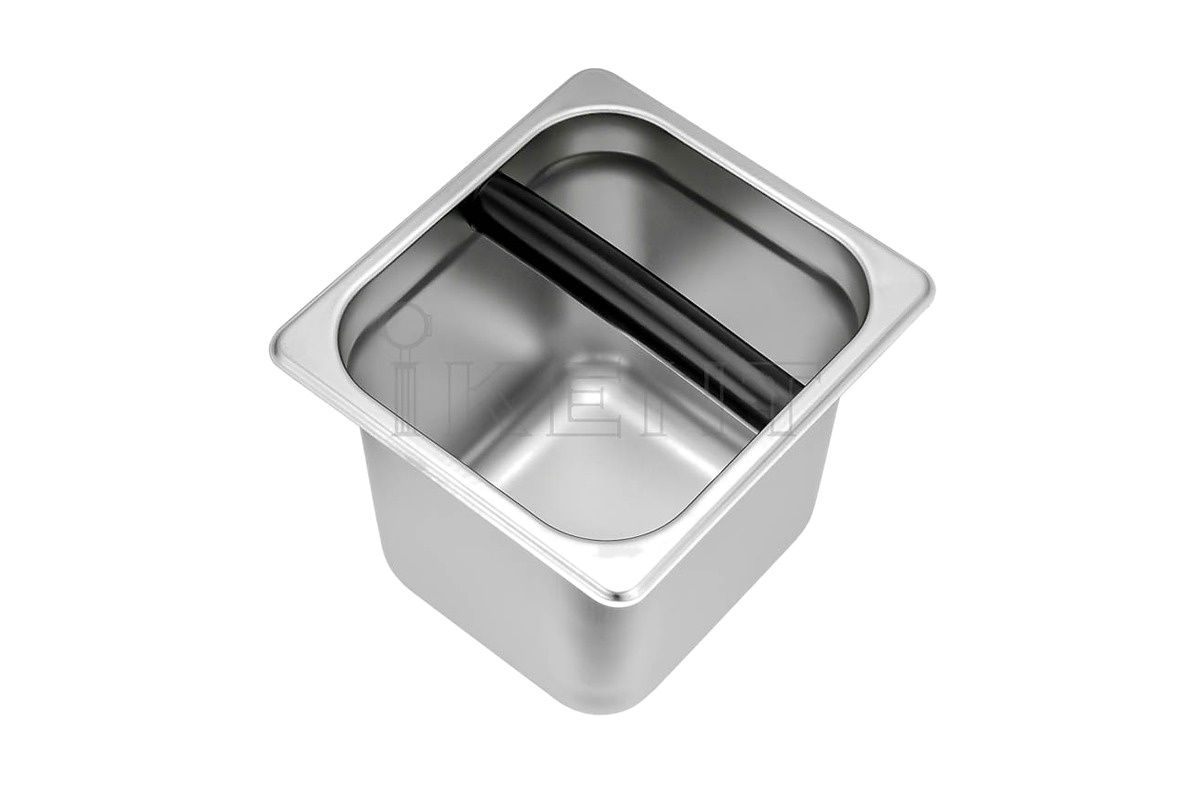
Which size do you need, 100 mm or 150 mm?
Both versions share the same 176 × 165 mm footprint. Only the height changes: 100 mm or 150 mm. In practice the choice is about how often you are willing to empty it, not about how much it can hold. A 150 mm box carries a full morning of service on a two-group machine; a 100 mm box suits a home bench, a tasting bar or a low-volume counter where the box is emptied at the end of every session anyway.
The trade-off is reach. A deeper box means a longer arm into a wet, gritty container when it is time to clear it, and more wall area to rinse. If the bar has two staff on a rush and no one wants to stop mid-service, take the taller one. If the box lives under a low shelf or is cleared after every few shots, the shallow one is quicker to live with. Neither is the professional version and neither is the domestic one – they are the same box at two depths.
The 176 × 165 mm footprint is specified to work with most portafilters and espresso machine models, including Breville, Rancilio, Gaggia, La Pavoni, Hamilton Beach, ECM, La Marzocco, Rocket, Alex Duetto and Astoria, and all E61 group machines. If your setup uses a naked or a bottomless portafilter, check the width of the basket against the opening before you order: the spouts on a standard holder are usually wider than the basket itself.
Where should it sit on the bar?
Put it where the handle already lands. The portafilter comes out of the group in the barista’s hand, travels a short arc, and gets knocked; that arc should be under half a metre and should not cross the milk station or the cup stack. Extra walking, repeated a few hundred times a day, is the kind of wasted motion that shows up as a slower queue rather than as an obvious problem. Keep the reach to about 50 cm and the loop stays short.
Second, give it a flat neighbour. The basket has to be wiped after the knock, and a distribution tool or a tamping mat needs somewhere to sit that is not the same surface the wet puck just crossed. Bars that mount the knock box into the counter usually leave a strip of clear worktop on one side for exactly this reason.
Third, keep it clear of the grinder. Grounds dust and wet puck debris travel further than people expect, and a knock box directly under a hopper is a good way to find moisture where you do not want it. The flanged rim on the CKB006S gives the box a stable seat on the counter, and the anti-slip base stops it walking when the tap is harder than usual.
What should you check before ordering?
Five things decide whether a knock box survives a year of service: the steel grade, whether the bar is removable, how the inside corners are formed, what holds the box in place on the counter, and whether the supplier can produce the compliance documents your channel asks for. The table below is the full specification of the CKB006S. If you are building a whole bar list rather than specifying one item, the wider range is mapped in the coffee tools catalogue.
| Item | Value |
|---|---|
| Model | CKB006S – square stainless steel knock box |
| Body material | 304 stainless steel |
| Knock bar / parts | Silicone or rubber knock bar; removable |
| Product size | 176 × 165 × 100 mm / 176 × 165 × 150 mm |
| Base | Anti-slip function at the bottom |
| Cleaning | Easy to disassemble and assemble; easy to clean |
| Finish | Mirror / matt / frosting / painting |
| Colour | Black / silver / customised |
| Logo | Customised, laser marking or silkscreen |
| Packaging | White box, gift box, carton |
| Testing | LFGB, FDA, RoHS and KFDA food-contact testing arranged on request; third-party report issued under your company name |
| Sample lead time | 3–5 days for existing models |
| Factory | Two plants in Jiangmen, 15 years in coffee tools |
| Compatibility | Most portafilters; Breville, Rancilio, Gaggia, La Pavoni, Hamilton Beach, ECM, La Marzocco, Rocket, Alex Duetto, Astoria, all E61 group machines |
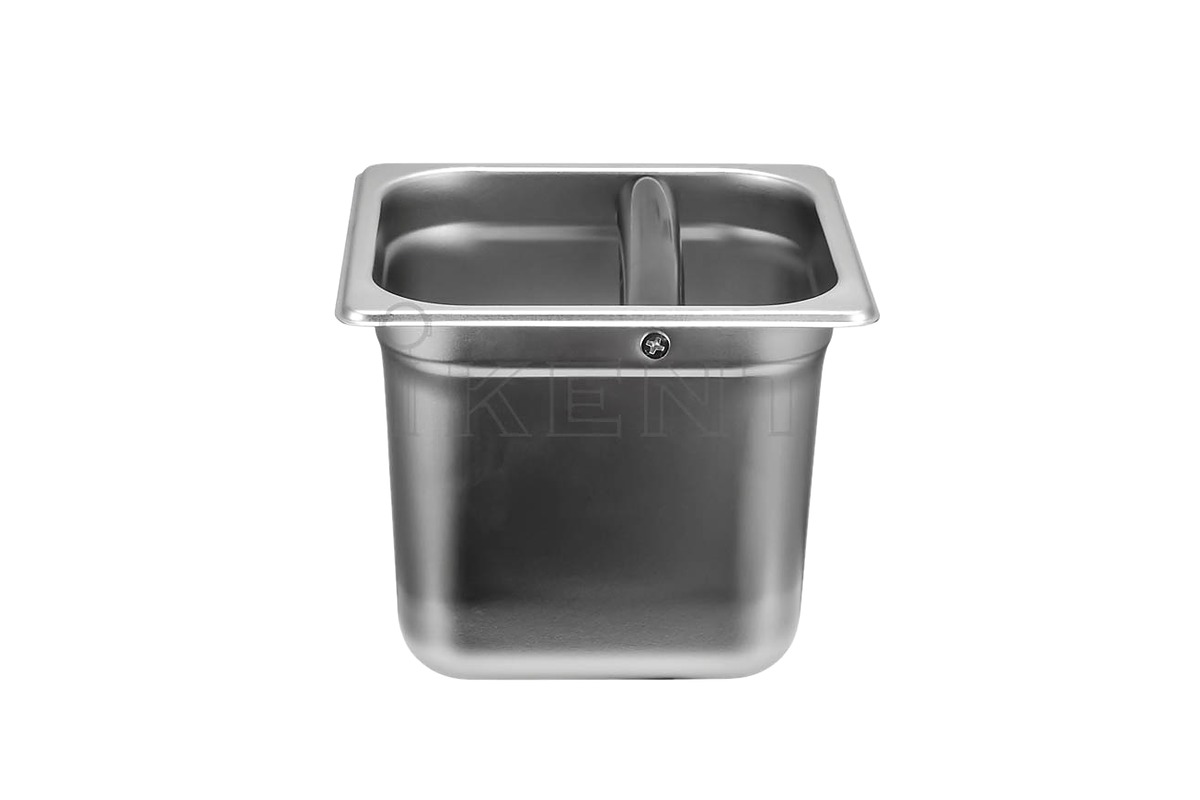
How do you clean it, and why does that matter?
Empty it before the end of every shift, not at the start of the next one. Wet grounds left overnight go sour, and once that smell is in a small box it takes a soak rather than a rinse to get out. Lift the bar, tip the puck, rinse the inside, wipe the rim, drop the bar back. On a box that comes apart, the whole job is a rinse and a wipe; on a welded one, it is a chore nobody wants to do, which is why it gets skipped.
The finish changes how often you will be wiping the outside. Mirror polishing reads well beside a polished group head but shows every fingerprint and water spot. Matt and frosting hide the marks and are the practical choice on a bar that is wiped down all day. Painting gives you a colour layer – a black unit is a finished surface, not bare steel. The material logic behind these choices is the same one we set out in 304 stainless steel coffee tools: a part that is wet all day needs a grade that resists corrosion at the formed corners, not just a shiny surface.
There is a second, less obvious reason buyers ask about material. A knock box never touches a drink, yet retailers, marketplaces and importers still ask for food-contact documentation on coffee bar tools. On this model, LFGB, FDA, RoHS and KFDA testing can be arranged on request: samples go to a third-party lab and the report is issued under your company name, with cost and lead time quoted per order. That last detail is the useful one for a private-label programme, because the certificate carries your brand rather than the factory’s.
Can you brand it and ship it to Amazon?
Yes, and this is where a factory-built part differs from a catalogue one. The CKB006S is made in our own plants in Jiangmen, with 15 years of coffee-tool production behind the bench: one plant forms and polishes 304 stainless steel, the other machines handles, springs and burrs. A change to the depth, the wall thickness or a Pantone colour goes to the bench rather than through a trading company. Finishes run from mirror, matt and frosting to painting; colours are black, silver or matched to any Pantone; the logo goes on by laser marking or silkscreen. Custom sizes, colours and packaging are available on OEM orders. The full set of options is in our coffee tools branding guide.
Packaging runs from a plain white box to a printed gift box and an export carton, and units can ship straight to Amazon FBA with FNSKU labelling, carton marking and delivery appointments handled, or door to door by express, air or sea. Samples of existing models are usually ready in 3–5 days.
On quantity: we are a factory, and every run is built to your spec, so the starting quantity is agreed with you rather than fixed in a catalogue. Minimums are quoted per project – they depend on the part, the finish and the packaging. Tell us the target quantity and the specification and we will come back with what is realistic on that tooling. Small first runs are possible, and the same discussion covers the printed box, which is a separate run from the steel part.
Frequently asked questions
What is a coffee knock box used for?
It takes the spent puck off the portafilter after a shot. You tap the handle against the rubber bar across the opening, the puck drops into the box, and the basket is ready to be wiped and dosed again. It is a between-shots tool, not a waste bin for the whole bar.
Will it fit my portafilter?
The 176 x 165 mm opening is specified for most portafilters and espresso machines, including Breville, Rancilio, Gaggia, La Pavoni, Hamilton Beach, ECM, La Marzocco, Rocket, Alex Duetto, Astoria and all E61 group machines. Measure a bottomless or naked portafilter against the opening before ordering if that is what you use.
Is the knock bar removable?
Yes. The unit is designed to be easy to disassemble and assemble, and the bar lifts out so the inside can be rinsed as one continuous surface. Silicone and rubber are the materials specified for the bar and other non-steel parts.
Which height should I choose?
Choose by how often you want to empty it. The 150 mm version carries a longer service on a busy two-group bar; the 100 mm version suits a home bench or a low-volume counter and is quicker to reach into when clearing. Both have the same 176 x 165 mm footprint and the same bar.
Can I get it in black with our logo?
Yes. Black and silver are standard and any Pantone colour can be matched. The logo is applied by laser marking or silkscreen, and packaging can be a white box, a printed gift box or an export carton. Custom sizes and packaging are available for OEM orders.
Do you provide food-contact test reports?
LFGB, FDA, RoHS and KFDA testing can be arranged on request. Samples are submitted to a third-party lab and the report is issued under your company name, with the cost and lead time quoted per order rather than as a blanket claim across the range.
How quickly can I get a sample?
Samples of existing models are usually ready in 3–5 days. Contact us with the size, finish and colour you want and we will arrange one; a custom finish or a printed box is quoted with the project rather than pulled from stock.
What is the minimum order?
There is no single number that applies to every version. Minimums are quoted per project and depend on the part, the finish and the packaging, because a change to any of those changes the run. Send the target quantity and the spec and we will confirm what is realistic on that tooling; small first runs are possible.
Espresso bench tools

Browse the full iKent Coffee Products range for sizes, finishes and OEM options.
Let’s Build Something Together
The coffee world keeps demanding quality, functional accessories. Partner with iKentcoffee to offer tools that perform and represent your brand proudly. From manual coffee grinders, espresso tampers and coffee canisters to milk pitchers and full coffee sets — we provide OEM & ODM solutions with low MOQ and stable supply.
👉 Contact us today to discuss wholesale, customization, or to request a sample.
💭 Jiangmen Aika Houseware Co., LTD
💭 Jiangmen Zhenhua Hardware & Plastic Factory
We look forward to the opportunity to collaborate with you!
WhatsApp: +86 13426845305
E-mail: kaelyn@ikentcoffee.com
Website: www.ikentcoffee.com
Leave A Comment