
There is a moment in every coffee tool purchase where a spec sheet says “304 stainless steel” and nothing else, and the buyer has to decide whether that means anything. It does – but not in the vague “premium material” way marketing usually implies. The grade tells you how the tool will behave after two years of contact with water, coffee oils and detergent, which is the part that actually costs money.

This guide explains what 304 means, where it genuinely matters, where it does not, and what to check when a supplier uses the term loosely.
What “304” actually refers to
304 is an austenitic stainless steel – the most widely used stainless grade in the world, and the default choice for food-contact equipment. In approximate terms it contains around 18% chromium and 8% nickel, which is why it is also called 18/8 stainless. Those two elements do different jobs.
Chromium forms a thin, invisible oxide layer on the surface that renews itself when scratched. That layer is the reason stainless does not rust under normal conditions – it is not that the metal cannot corrode, it is that the surface repairs faster than corrosion progresses. Nickel stabilises the structure and improves resistance to acids, which matters when what goes inside will be acidic coffee rather than water.
Both should be taken as a baseline rather than an achievement: 304 is not exotic, it is simply the correct, defensible answer for anything touching food repeatedly.
Why it suits coffee specifically
Coffee presents a harder materials problem than most people expect. It is slightly acidic, oily, hot, and it leaves residue that goes rancid. A material used for coffee tools therefore needs four things, and 304 delivers all four reasonably well:
It does not hold flavour. The surface is non-porous at any scale relevant to coffee oils, so yesterday’s roast does not season today’s cup. This is why stainless storage and brewing equipment tastes neutral and why some unglazed alternatives do not.
It survives heat cycles. Repeated heating and cooling does not degrade the material, unlike plated finishes that can eventually lift.
It cleans honestly. Warm water, mild detergent and a cloth is the whole requirement – no special treatment and no re-seasoning routine.
It takes a knock. Pitchers, tampers and distributors get dropped. Steel dents and keeps working, where brittle materials simply fail.
Where 304 has limits
Honesty here saves buyers money. 304 is corrosion-resistant, not corrosion-proof. The situations that reliably cause problems all involve prolonged contact with chlorides or neglect:
Leaving salty or highly chlorinated solutions sitting in a vessel for long periods can cause pitting. Putting tools through aggressive chemical sterilisation repeatedly without rinsing will eventually mark the surface. And storing anything steel permanently wet – steaming next to a kettle, or stacked damp in a closed cupboard – invites surface staining that looks like rust but is usually just deposits.
None of this is a defect. It is simply what the grade is and is not, and the fix in every case is drying rather than upgrading the alloy.
304 versus 316 versus 430
Worth knowing because quotes will sometimes reference them:
316 adds molybdenum for improved chloride resistance. It costs more and is specified for marine hardware and some processing equipment. For coffee tools it buys very little in ordinary use.
430 is ferritic – magnetic, lower nickel content, less corrosion-resistant, and cheaper. It is used for decorative panels and some kitchenware where contact is brief. It is not the right choice for the inside of something repeatedly holding hot liquid.
If a supplier cannot state the grade in writing, that is a more useful signal than the grade they claim.
Finishes change performance more than expect
Two tools made from identical 304 behave differently in the hand and across the same sale channel, purely because of finish. Mirror polish looks reflective and photographs brightly but shows fingerprints and fine scratches early. Brushed satin hides wear better and is generally preferred for tools handled daily – which is why most bar equipment leans that way.
Coatings open the branding question. A spray coating or baked paint finish lets a stainless tool carry colour, which is how a range can share a visual language from grinder to milk pitcher to storage canister. The trade-off is durability under abrasion: coated surfaces wear first on edges and high points, so it is worth deciding where coating is acceptable and where bare steel is better.
How to sanity-check a stainless claim
Three practical checks, none requiring a laboratory. One: a magnet. 304 in its annealed state is very weakly magnetic – strong attraction suggests a ferritic grade underneath. Two: ask for material documentation per batch, not per catalogue, because that is the difference between a guarantee and a brochure. Three: look at the welds and seams. quality is visible in whether joints are smooth and continuous or wavy and ground back.
Frequently asked questions
Is 304 stainless food-safe?
Yes – it is one of the standard food-contact grades and is used for cooking equipment, storage vessels and preparation surfaces globally. What matters beyond the grade is that the finish and any coating are also declared food-safe for the contact they will see.
Will 304 rust?
It resists rust in ordinary use, but it is not immune. Prolonged contact with salt or harsh chemicals, or being stored wet, can cause surface staining or pitting. In almost every case, drying the tool properly prevents it.
Does the finish affect how the coffee tastes?
The metal itself contributes nothing detectable. Cleaning habits do: any surface that is hard to clean clean – scratched interiors, seams that trap grounds – accumulates old oils, and old oils are what you actually taste.
Tools made in 304 stainless
 Coffee Tamper-CT001SS
- Milk Pitcher Jug-MK002SS
- CGD008 Manual Coffee Grinder – 5-Axis CNC Stainless Steel Conical Burr


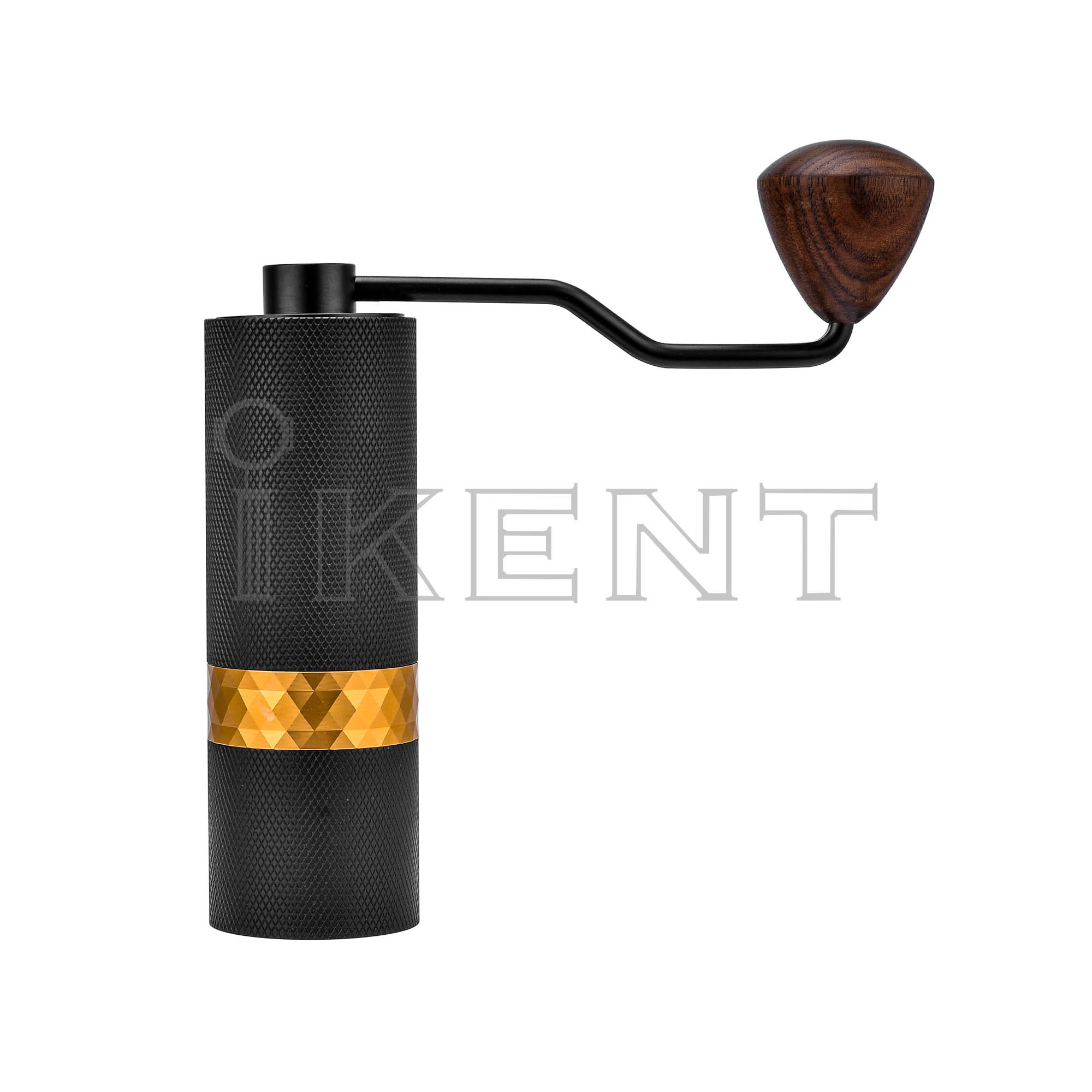
Browse the full Ikent Coffee Products range for sizes, finishes and OEM options.
Let’s Build Something Together
The coffee world keeps demanding quality, functional accessories. Partner with iKentcoffee to offer tools that perform and represent your brand proudly. From manual coffee grinders, espresso tampers and coffee canisters to milk pitchers and full coffee sets — we provide OEM & ODM solutions with low MOQ and stable supply.
👉 Contact us today to discuss wholesale, customization, or to request a sample.
💭 Jiangmen Aika Houseware Co., LTD
💭 Jiangmen Zhenhua Hardware & Plastic Factory
We look forward to the opportunity to collaborate with you!
WhatsApp: +86 13426845305
E-mail: kaelyn@ikentcoffee.com
Website: www.ikentcoffee.com
Leave A Comment