
The coffee canisters that stay on kitchen counters share four traits: they seal airtight, they block light, they hold a standard 250 g bag without headspace problems, and they look good enough that hiding them in a cupboard feels like a waste. Everything else – materials, finishes, lids – is variation on those four. This guide explains why each matters in daily use, and how to tell a canister that earns counter space from one that ends up in the back of a cabinet.

Most coffee storage advice stops at “keep it airtight”. But anyone who has owned three or four canisters knows the differences run deeper: some lids need two hands, some seams collect old grounds in the threads, some look tired after a month of fingerprints. Those small daily frictions decide whether a canister becomes part of the morning routine or gets retired to the cupboard – and they are exactly the details worth checking before buying, or before stocking a range.
Freshness, measured not promised
Coffee’s enemies are oxygen, light, heat and moisture, in roughly that order for a home kitchen. An airtight seal handles the first; an opaque body handles the second; storage in a cool cupboard handles the rest. The CO2 valve debate – one-way valves let fresh-roasted coffee off-gas without letting oxygen in – matters most in the first week after roasting. For coffee bought from a local roaster and finished within a fortnight, a simple airtight canister does the job; for stockpiling or subscriptions, the valve earns its place.
The honest test is the aroma test, not the date on the bag: coffee stored well still smells loud when you open the canister two weeks later. Coffee stored badly smells like a supermarket aisle.
The counter test
A canister that lives on the counter gets judged every morning, harshly and half-asleep. The details that separate keepers from cupboard-dwellers are unglamorous: a lid that opens with one hand while the other holds a scoop; a body that wipes clean of oily fingerprints; a base that does not scratch stone worktops; proportions that fit under the cupboard lip. None of these show in product photos, which is precisely why they decide long-term satisfaction.
Weight matters more than people expect. A substantial canister – steel, properly finished – feels deliberate on the counter. A featherweight one reads as plastic-adjacent no matter what it is made of.
Stainless, glass or ceramic?
Stainless steel is the all-rounder: fully opaque, light-proof, tough, and light enough to move around. Its weakness is aesthetics – it relies on finish quality, and a poor finish shows every fingerprint.
Glass shows the coffee, which customers love and light punishes. It suits a counter in a dim kitchen or a dark-roast household that finishes bags quickly; amber glass improves the odds. Ceramic sits between: opaque, heavy, endlessly customisable with glazes – and the most fragile of the three, which matters in households with stone floors or small children.
For a brand building a range rather than a household picking one canister, stainless across the whole working range keeps protection consistent; differentiate the premium tier with finish, lid style and print rather than material – the same logic behind most successful coffee storage setups.
Sizing for real households
The classic mistake is sizing for the bag instead of the habit. A 250 g bag – the global default – fills a well-proportioned 1-litre canister nearly full, which is exactly what you want: minimal headspace means less oxygen sitting on the beans. Buying “bigger to be safe” creates a half-empty vessel that stales the coffee faster and looks worse on the counter. Households going through more than 500 g a week are better served by two canisters than one oversized one.
Care and the details that decide longevity
Coffee oils migrate into every thread and gasket over months. A canister that disassembles into three simple parts – body, lid, gasket – gets cleaned; one that does not, does not, and eventually every grind smells faintly of the last hundred. Silicone gaskets rinse and dry in seconds; replacement gaskets being available at all is a quiet signal of a manufacturer that expects its product to be used for years.
For the storage science behind these choices – temperatures, freezing myths, realistic shelf lives – our coffee bean storage guide goes deeper. And for brands specifying canisters at volume, our notes on specifying a stainless coffee canister cover the manufacturing side.
Frequently asked questions
Do coffee canisters really keep coffee fresh?
A genuinely airtight, opaque canister extends peak flavour from days to roughly two to three weeks for most roasted coffee. It cannot stop staling – nothing can – it just slows it dramatically.
What size canister suits a 250 g bag?
One litre, give or take. The bag should fill the canister most of the way; large headspace is the enemy of freshness.
Is a CO2 valve necessary?
Only for coffee in its first week post-roast, when off-gassing is strong. For coffee bought retail and used within a fortnight, a plain airtight seal does the same job with fewer parts to fail.
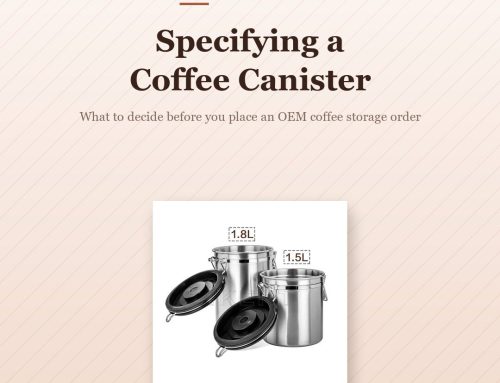
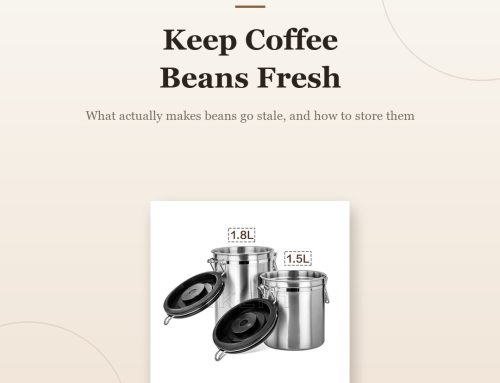
Canisters that earn counter space


Browse the full Ikentcoffee Canister Container Coffee Bean Stainless Steel range for sizes, finishes and OEM options.
Let’s Build Something Together
The coffee world keeps demanding quality, functional accessories. Partner with iKentcoffee to offer tools that perform and represent your brand proudly. From manual coffee grinders, espresso tampers and coffee canisters to milk pitchers and full coffee sets — we provide OEM & ODM solutions with low MOQ and stable supply.
👉 Contact us today to discuss wholesale, customization, or to request a sample.
💭 Jiangmen Aika Houseware Co., LTD
💭 Jiangmen Zhenhua Hardware & Plastic Factory
We look forward to the opportunity to collaborate with you!
WhatsApp: +86 13426845305
E-mail: kaelyn@ikentcoffee.com
Website: www.ikentcoffee.com
Leave A Comment