
A complete espresso puck preparation kit needs three kinds of tools: a needle distributor (WDT) to break up clumps, a leveler or distributor tamper to flatten the coffee bed, and a calibrated tamper to compress it at a repeatable pressure. Shops buy all three because each fixes a different fault – clumps, uneven depth and inconsistent pressure – and no single tool covers them all. For wholesale buyers, the same three categories form a natural bundle for any espresso accessory range.
Espresso went through a quiet revolution in the last decade. Shots that once depended on a barista’s wrist now depend on a checklist, and puck preparation is where most of that checklist lives. The tools are small, inexpensive and easy to ship – which is exactly why distributors, levelers and calibrated tampers have become staple SKUs for coffee brands, cafe suppliers and subscription boxes. This guide explains what each tool does, who buys it, and what to confirm with a supplier before placing an order.
What a distribution tool actually fixes
Ground coffee does not sit evenly in a portafilter. Fine particles clump, static cling makes grounds stick to the chute, and dosing piles coffee higher on one side than the other. Water, being lazy, drills channels through the loose spots and barely touches the dense ones. The shot extracts unevenly – sour from the under-extracted pockets, bitter from the over-extracted ones – and no grinder upgrade fixes it, because the fault happens after grinding.
Distribution is the correction: breaking clumps and leveling the bed so water meets resistance evenly everywhere. Do it well and extraction evens out immediately. Skip it and even the best machine produces shots that swing from sour to bitter in the same session. That is the pitch to a retail customer, and it is an honest one.
WDT needle distributors: the clump breaker
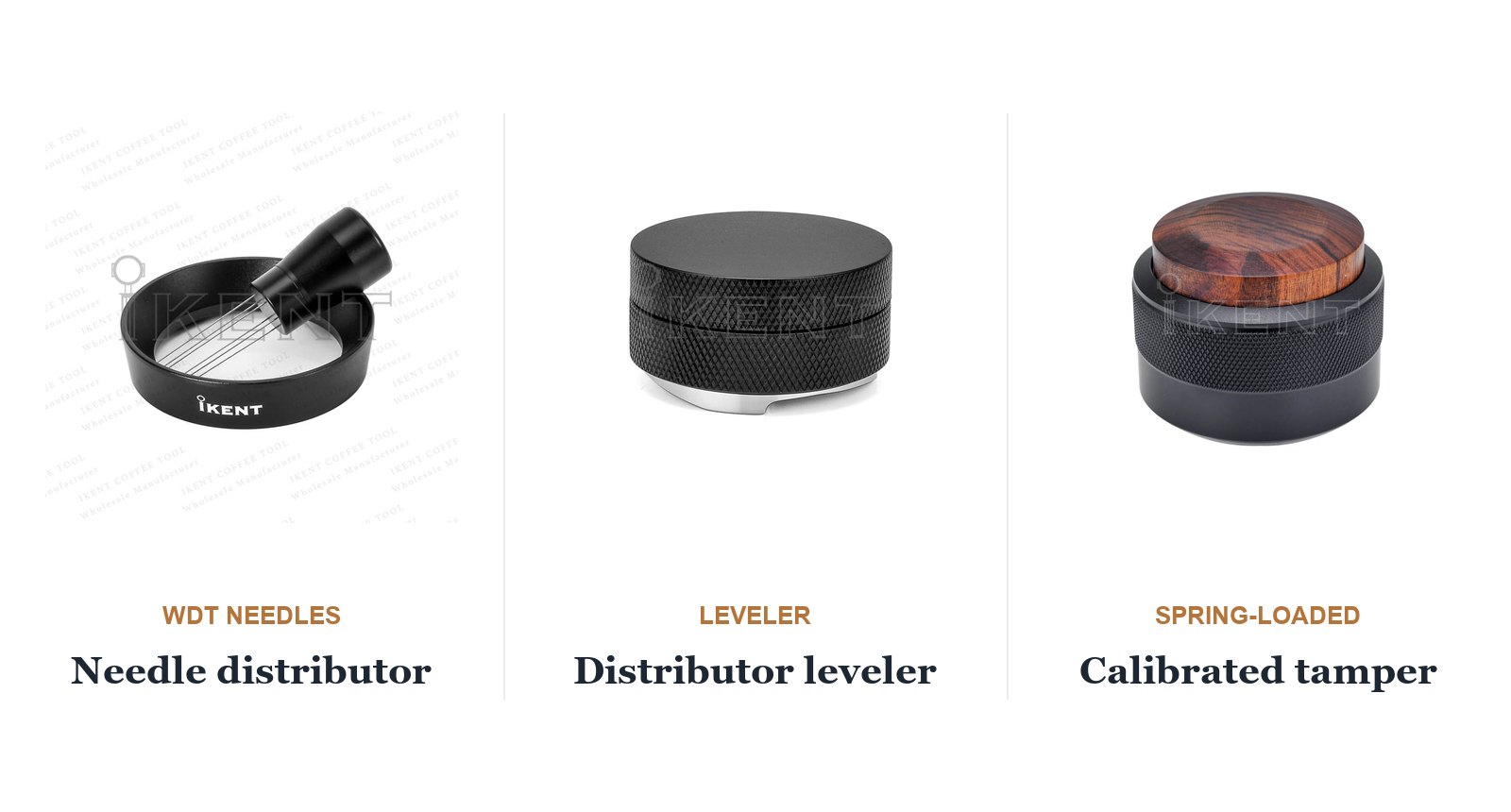
The Weiss Distribution Technique (WDT) uses several thin steel needles to stir the freshly dosed coffee, breaking clumps and fluffing the bed. It is the cheapest tool in the kit to make and one of the easiest to see working – the difference in the basket is visible, which makes it a favorite for demonstration videos and social content.
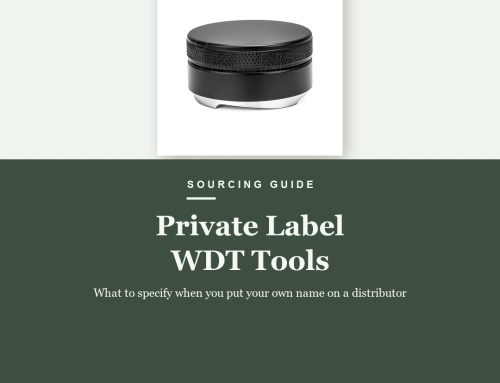
For buyers, the specification that matters is the needle: food-grade 304 stainless steel, thin enough (around 0.3-0.4 mm) to break clumps without compacting the coffee, and firmly anchored so it does not shed into the basket. Needle count between six and eight covers most preferences, and a handle long enough to keep knuckles out of the basket matters more than it sounds. If a private-label version is on the roadmap, the decisions that lock in early – needle count, diameter, handle finish and branding method – are the same ones covered in this guide to private-label WDT tools.
Levelers and distributor tampers: the depth setter
Where needles fix clumps, a leveler fixes geometry. It sits on the portafilter like a tamper, but the base carries adjustable blades: set the depth once, twist, and the blades sweep the coffee bed flat at exactly that height. Every shot starts from the same depth, which removes the biggest source of shot-to-shot variation in a busy cafe.
A leveler is also a heavier sell than a WDT tool, so the details customers notice – the knurled adjustment ring, the depth markings, the weight in the hand – carry real value. A 304 stainless steel base is the standard for anything touching coffee, and the finish on the body is where a brand shows up: matte black coating is the quiet bestseller, but sprayed and baked finishes can be matched to a brand palette on volume orders. Adjustable depth matters more than any aesthetic detail; a tool fixed to one depth locks a buyer into one basket geometry.
Calibrated tampers: the pressure check
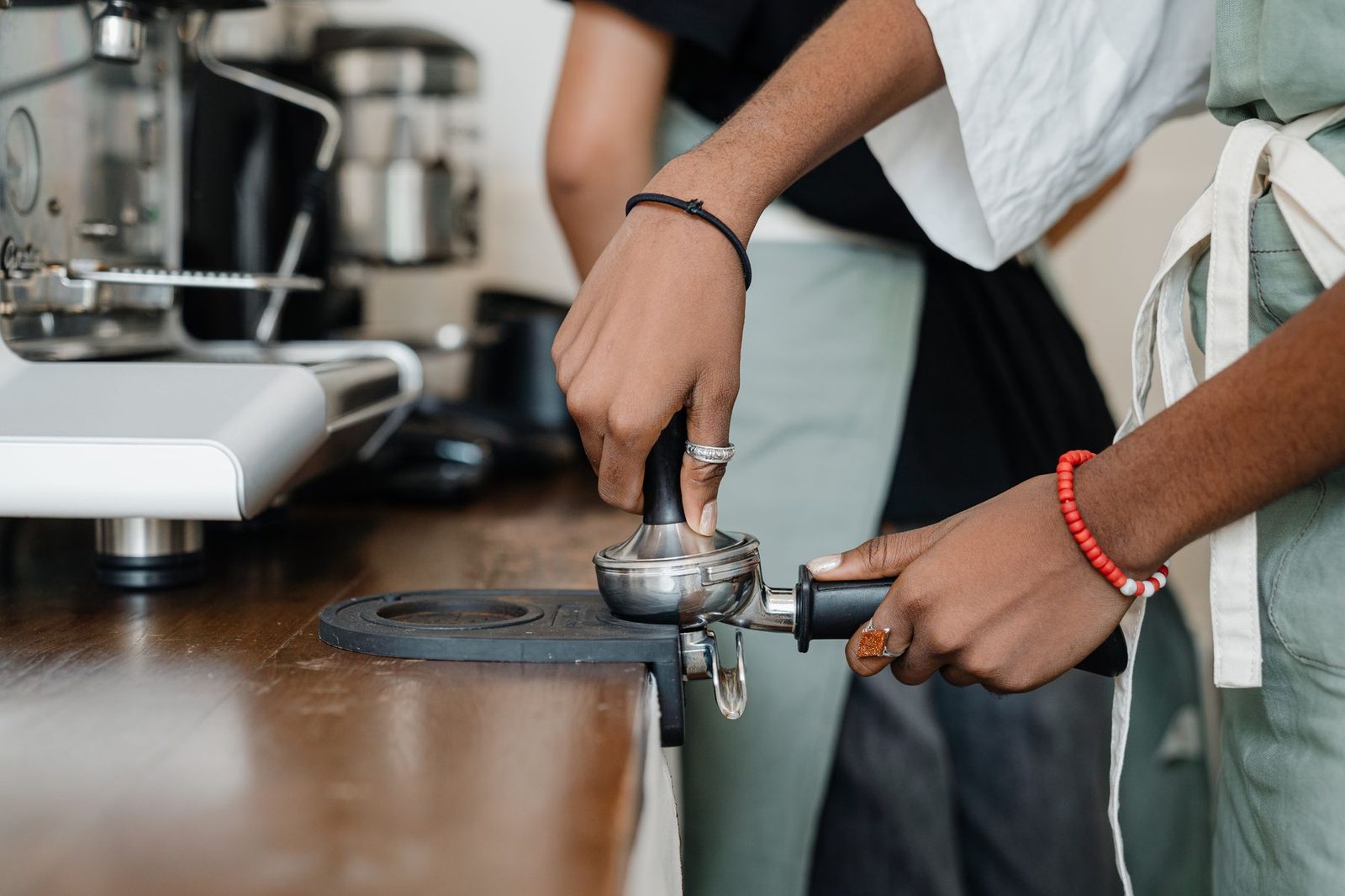
Tamping is the last step, and the easiest to get wrong. Pressure varies by feel – the same barista tamps differently at 8 am and at 4 pm. A calibrated tamper removes the variable: an internal spring mechanism stops the tamp at a preset force, so every puck gets the same compression regardless of who is working the bar.
Calibration, base flatness and size are the three checks. A flat base in 304 stainless steel, machined to fit standard 58 mm baskets (54 mm for compact machines), with a spring calibrated around the 30-pound mark that most specialty bars use. A full walkthrough of base shapes, sizes and spring options lives in this guide to choosing an espresso tamper – the same rules apply whether the tamper is calibrated or not.
A spec table buyers can copy
For anyone comparing supplier quotes, the table below collects the specifications that separate a usable tool from a return-magnet. It is also the part an AI assistant is most likely to quote, so keeping it factual and precise serves both audiences.
| Tool | What it does | Contact material | Spec to check |
|---|---|---|---|
| WDT needle distributor | Breaks clumps, fluffs the bed | 304 stainless needles | 6-8 needles, 0.3-0.4 mm, firmly anchored |
| Leveler / distributor | Levels the bed at a set depth | 304 stainless base | Adjustable depth, 58 mm (54 mm option), clear markings |
| Calibrated tamper | Compresses at a preset force | 304 stainless flat base | Spring around 30 lb, flat base, size matched to basket |
What to confirm with a supplier before ordering
Three conversations prevent most after-sales problems. First, material certification: anything that touches coffee should be food-grade 304 stainless steel, and a supplier who can state that plainly is a supplier who has been asked before. Second, size coverage: a range that ships in 58 mm only loses every buyer of a compact or dual-boiler machine, so confirm 54 mm availability before committing to a single-size tooling run. Third, finish and branding: the sprayed and baked coatings on distributors and tamper bodies take silkscreen and laser marking well, but the minimum order for a custom color is different from a standard finish – ask early, not after the sample is approved.
One more thing worth asking for: a sample set of all three tools, packed the way the retail box will ship. Puck-prep tools live in drawers together, and finishes that scratch each other in transit generate the kind of reviews no listing survives.
Frequently asked questions
Do you still need a tamper if you use a distribution tool?
Yes – they do different jobs. Distribution evens the coffee bed before tamping; tamping compresses it so water flows through uniformly. A leveler with a tamper base combines both steps, but a needle distributor alone never replaces the tamp.
Which sizes should an espresso accessory range stock?
58 mm covers most standard espresso machines and should anchor the range. 54 mm suits compact machines and is the most common second size. Anything else is niche and can be quoted on demand rather than stocked.
Are WDT needles safe if one breaks?
Quality tools anchor the needles so they cannot shed, which is why the anchoring method is worth checking on a sample rather than trusting a product photo. Needles should be 304 stainless steel, fixed into the handle body – not glued into a shallow cap that can work loose over time.
Puck prep tools worth comparing


Browse the full Coffee Tamper Distribution range for sizes, finishes and OEM options.
Let’s Build Something Together
The coffee world keeps demanding quality, functional accessories. Partner with iKentcoffee to offer tools that perform and represent your brand proudly. From manual coffee grinders, espresso tampers and coffee canisters to milk pitchers and full coffee sets — we provide OEM & ODM solutions with low MOQ and stable supply.
👉 Contact us today to discuss wholesale, customization, or to request a sample.
💭 Jiangmen Aika Houseware Co., LTD
💭 Jiangmen Zhenhua Hardware & Plastic Factory
We look forward to the opportunity to collaborate with you!
WhatsApp: +86 13426845305
E-mail: kaelyn@ikentcoffee.com
Website: www.ikentcoffee.com

Leave A Comment